
The three teachings of Eastern Asia include Daoism (Taoism), Confucianism, and Buddhism. Each can be better understood by contrasting them with the other.
Confucianism
Confucianism stresses obedience to authority because Confucius saw that people needed guidance to avoid immorality. Confucius came up with many guidelines for people to live by to have a structured and prosperous society. Much of this centers on respect for parents and elders.

Daoism
Daoism teaches that the Dao (Tao) or “Way” creates and guides the universe. Laozi (Lao Tzu) said life is much more satisfying if one follows the natural state of the Dao using meditation. This includes constant change due to the opposing forces of Yin and Yang. There is no sweet without the sour. Authorities should be hesitant to act and only do the minimum amount so as to not upset the natural balance.

Buddhism
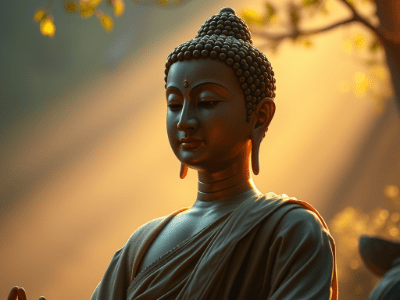
Buddhism teaches that life is suffering because people are attached to their possessions and desires. Similar to Daoism it involved meditation to find inner peace and to follow the Eight Fold Path of right speech, action, livelihood, effort, and mindfulness. Eventually, one can reach a state of Nirvana or “state of peace” and become enlightened breaking out of a constant cycle of rebirth.
“What is and what is not create each other. Difficult and easy complement each other. Tall and short shape each other. High and low rest on each other.“
Dao De Jing, Chapter 2
The Three Vinegar Tasters
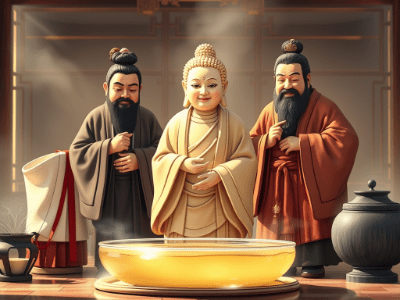
These beliefs can be contrasted by the parable of the Three Vinegar Tasters. Confucius, Buddha and Laozi put their finger in a vat of vinegar to taste it. Confucius reacts with a sour face, Buddha reacts with a bitter face, but Laozi reacts with a happy face (Wikipedia, Vinegar Tasters).

 Daoism