

Master Zhuang is the second most influential writer in Daoism (Taoism) and the book Zhuangzi was named after him. Chapter One is entitled Free and Easy Wandering and challenges our normal definition of usefulness. How useful a thing is depends on the sizes involved, lifespan, and purpose.
Usefulness Based on Size
Usefulness depends on the relative sizes involved. There was a bird who measured a thousand miles wide and flew for nine months straight. It found the wind very useful in order to fly long distances. There was a small cicada and dove who could barely fly to the next tree. They did not find the wind useful because they only traveled a few yards. A massive gourd was useless to carry water because it became too heavy, but it could be used as a boat to float down a river.
Usefulness Based on Lifespan
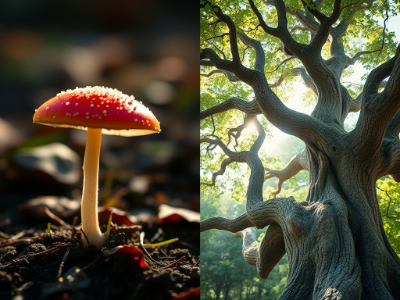
Usefulness is dependent on the lifespan involved. The morning mushroom does not see the twilight, the summer cicada does not see the spring. What was useful for these short lived beings are not useful to longer lived ones such as humans or animals.
Usefulness Based on Purpose
Usefulness also depends on the purpose a thing. A family had a secret recipe for chapped hands ointment and used it when bleaching silk in water. Over generations, they never made much money. They eventually sold the recipe to a traveler who gave it to soldiers to help them hold weapons during a battle. The army won and the king rewarded the traveler with much land. A gnarled and twisted tree may be worthless to a carpenter but may be perfect to provide shade. The same item is useless for one purpose but has much use for another.

Lesson for the Individual
Our personal circumstances often make it hard to see what is important in life. The small dove can’t understand why another would want to fly hundreds of miles because the dove only needs to travel a few yards. We often put significant value on our accomplishments even when they are relatively small. The dove may have an outsized pride in traveling just a few yards. A person shouldn’t take pride in their own accomplishments such as gaining fame, wealth, or power. The Daoist would say the individual shouldn’t be bothered by such things, but be content in finding usefulness in the everyday things around them.
Conclusion
Master Zhuang recognizes that usefulness is subjective to the time, space, and purpose. What may be useful for a large creature is not useful for a small one. What is useful for a long lived creature is not useful to a short lived one. Sometimes usefulness can be found by shifting the perspective of how to use a thing. At first it may seem worthless but it may just be looking for the right purpose. The individual should not find value in pride, fame, and power. Instead they should be content in finding usefulness all around them.
Resource
Complete Works Of Chuang Tzu, Burton Watson, translator. Columbia University Press, 1968. A good and classic translation of Chuang Tzu.
 Daoism