The Liezi is considered the third most important text in Daoism (Taoism) after the Dao De Jing and Zhuangzi. Chapter three is named King Mu of Zhou and focuses on harmony and perspective.
Creation
The sage recognizes that the Dao is responsible for creation. This process is too complex to truly understand so we label it Dao for convenience sake.
“The agency of Creation is subtle in its skill, profound in its effect, certainly hard to fathom, hard to comprehend.”
Yin and yang creates change in creation and is easier to notice.
“Working on form is obvious in its skill, shallow in its effect, so it readily appears and disappears.”
Yin and yang are responsible for important events such as birth, growth, happiness, and death.
“What are the eight manifestations of consciousness? Purpose, action, gain, loss, sadness, happiness, birth, and death.”
They seek balance and results in differences in temperature, light, intelligence, strength, and wakefulness.
“There yin and yang are precisely regular, so cold and heat alternate; dark and light are clearly divided, so day and night alternate. Some of the people there are intelligent, some are foolish.”
“Alternatively waking and sleeping, they consider their doings while awake to be real and their perceptions while dreaming to be illusion.”
Reality
The sage recognizes that life and death are both aspects of creation.
“What Creation initiates and what yin and yang transmute is said to be born and said to die. What is altered in terms of form by finding out processes and understanding change is said to be a transformation and said to be illusory.”
Dreams and wakefulness are also aspects of creation.
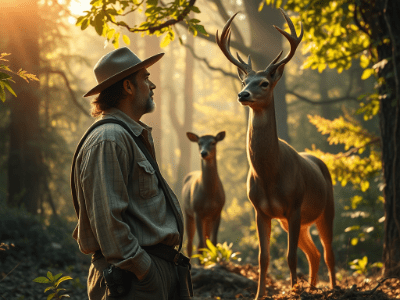
“’Earlier a woodcutter dreamed he’d caught a deer but didn’t know where it was; now I’ve found it, so that must have been a true dream!’ His wife said, ‘Could it be that you dreamed you saw a woodcutter catching the deer? Was there even a woodcutter? Now you’ve actually found a deer—does this mean your dream was true?’ Her husband said, ‘If that’s how I found the deer, what does it matter if it was the dream of another or my own dream?’”
Moderation
The sage strives for moderation which includes finding the proper work life balance. Working too hard causes exhaustion.
“By day he did his tasks groaning and grunting, while at night he slept soundly, completely worn out. As his consciousness dissolved, every night he’d dream he was ruler of a nation, reigning over the people, in charge of the affairs of the nation. Partying in palaces, indulging in his heart’s desires, he was incomparably happy.”
Forcing others to work too hard will also lead to unbalance. Mr. Yin was a businessman who worked his employees too hard.
“Every night he dreamed he was a servant, running all sorts of errands and doing all sorts of chores, repeatedly hollered at and beaten with a stick. In his sleep he muttered, groaned, and grunted all night long.”
In the Moment
The sage stays in the moment and doesn’t worry about the future or regret the past. Huazi of Song had short term memory. His family sought help and he was eventually cured.
“Before, when I was forgetful, I was serenely unaware of whether heaven and earth existed or not. Now that I am suddenly conscious of the past, I’m upset by the survival and passing, the gain and loss, the sorrow and joy, the liking and disliking, of several decades past; I’m afraid that future survival and passing, gain and loss, sorrow and joy, liking and disliking, will disturb my mind like this—can I even have a moment of forgetfulness?”
Perspective
The sage never assumes they are right and recognizes the perspectives of others. Mr. Pang’s son has a condition where he saw everything backward. What was white was black and hot was cold.
“How do you know your son is confused? Nowadays everyone in the world is confused about right and wrong, blind about what is beneficial and what is harmful. There are so many with the same affliction that no one realizes it.”
“If everyone in the world had a mind like your son, then you would be the one who’s confused.”
The sage acknowledges that perception shapes reality. They are always willing to see things from another’s perspective.
“Then they pointed to a shrine and said, ‘This is your village shrine.’ The old man sighed. Then they pointed to a house and said, ‘This was your ancestors’ abode.’ Now he wept profusely. They pointed out a mausoleum and said, ‘There are your ancestors’ tombs.’ The man wailed uncontrollably. His fellow travelers laughed and said, “We were fooling you—this is still only the country of Jin.”
Conclusion
While the sage doesn’t understand the Dao, they realize it is responsible for creation. Yin and yang create change and seeks balance. Life, death, reality, and dreams are all aspects of the Dao.
Moderation is a way to find harmony and includes finding a good work life balance. The sage stays in the moment and does not regret the past or worry about the future. They never assume they are right and consider the perspectives of others. They understand that perception defines reality.
The Liezi is considered the third most important text in Daoism (Taoism) after the Dao De Jing and Zhuangzi. Chapter two is named The Yellow Emperor and focuses on living with the Dao. It shares many parables found in Zhuangzi including Feeding Monkeys (Zhuangzi, Chapter 2), Taming Tigers (Zhuangzi, Chapter 4), Shaman (Zhuangzi, Chapter 7), Ferryman, Archery Contest, Swimming at the Waterfall, Catching Cicadas, and Training a Fighting Cock (Zhuangzi, Chapter 19).
Emptiness
The sage becomes one with nature. This is called achieving a state of emptiness. There is no difference between self and the outside world.
“There was no more inside or outside.“
“If even one who gains wholeness in wine is like this, how about one who gains wholeness in Nature?”
“That time I showed him never leaving my source. I harmonized with him by being empty; he didn’t know who or what I was, and took me for reeds bending in the wind.”
Acceptance
The sage lives in a state of acceptance. They do not desire but follows the contour of life. They do not like or dislike but accept life for what it is.
“The people had no habits or cravings, they were just natural. They didn’t know to like life or to detest death, so there was no premature death. They didn’t know to prefer themselves to others, so there was no love or hatred.”
Harmony with Others
The sage is in harmony with others. They are honest and do not get angry or intimidate.
“They do not intimidate and do not get angry; the eager and honest are their servants.”
The sage recognizes that people use knowledge to manipulate one another.
“When people entrap each other through the differences in their abilities, it’s always like this. Sages use intelligence to encompass ignorant people the way the monkey trainer used his wits to trap the monkeys.”
When one is in the Dao, others will want to be near them.
“Confucius and Mo Di had no territory, yet they were leaders; they had no offices, yet they were chiefs. Everyone in the world, men and women, wanted to contribute to their safety and welfare.”
Accomplishing
When one is with the Dao they possess a single mindedness.
“Didn’t you know? When people are completely sincere, that can affect things.”
“When concentration is undivided, it’s like genius.”
“However vast the universe, however manifold myriad things, I am only aware of the cicada’s wings. I don’t fidget, I don’t take my attention off the cicada’s wings for anything—how could I fail to catch it?”
They can accomplish things that seem impossible.
“The reason someone who can swim can teach it is that he thinks little of the water; the reason someone with talent for swimming can soon do it is that he forgets the water. As for the diver who can handle a boat without ever having seen one before, he looks upon an abyss as like dry land, regards a boat capsizing as like a cart overturning.“
“I go in with the whirlpools and come out with the torrents. I follow the way of the water, without imposing my self on it. This is how I go through it.”
When one does not fear life and death, they do not let concerns of the world bother them.
“Neither death nor life, surprise nor fear, enter into his chest, so he is not frightened when he encounters things.“
“Harmony means universal assimilation to things; then things cannot cause injury or obstruction.”
The reason people worry is that they are concerned with the results. The sage doesn’t let the troubles of the world affect them.
“When you gamble for a chip, you’re clever: when you gamble for your belt buckle, you get nervous; if you gamble for gold, you feel faint. You may have the same skill, but when you’ve got something to lose then you care about externals. Usually those who care about externals are inept in regard to the inward.”
Sincerity
The Way is sincere. The sage always acts with pure intention.
“There was a man living by the sea who liked seagulls. Every morning on the sea he’d sport with the seagulls, and they’d come by the hundreds, without fail. His father said to him, ‘I’ve heard the seagulls all play with you. Catch one and bring it here so I can enjoy it.’ The next day when he went to the sea, the gulls danced around but didn’t land. Therefore it is said that perfect words make no claim, perfect action has no contrivance.”
“Now there is no thought in my mind to upset or indulge, so birds and beasts look upon me as one of their own kind.”
Yielding
The sage knows that to yield is to win while the use of force is to fail. Flexibility is the ultimate state of being.
“The way of always winning is called gentility, the way of not always winning is called force. Both are easy to know, yet no one knows them.”
“If you would be forceful, you must protect it by yielding. Develop flexibility and you will be firm; cultivate yielding and you will be strong. Force overcomes its inferior—meeting an equal, it’s destroyed. Gentility overcomes superiors—its power cannot be measured.”
Government
When a nation follows the Dao there is no need for rules, leaders, or profit. The people no longer think about right or wrong but simply follow nature. There is no need for charity or hoarding because everyone has what they need.
“In that country there were no political leaders, just a state of nature. They didn’t know how to rebel or obey, so there was no profit or harm.”
“They give no charity, yet everyone has enough; they do not accumulate or save, yet they themselves have no lack. Yin and yang are always in harmony.”
A nation should always seek to avoid the use of force and instead yield if possible.
“When an army is forceful it perishes; when wood is inflexible, it breaks. Gentility and yielding are cohorts of life, inflexibility and force are cohorts of death.”
Conclusion
The sage achieves a state of emptiness by accepting whatever comes. They live in harmony with others and is always sincere. The sage seeks to always be flexible for they know that knows that yielding is winning while force is failure. There is a single mindedness that comes with the Dao that makes it possible to accomplish challenging tasks. In a similar way when a nation follows the Dao there is no need for leaders or laws. Everyone has what they require. The nation should always seek to avoid the use of force.
The Liezi is considered the third most important text in Daoism (Taoism) after the Dao De Jing and Zhuangzi. Chapter one is named Celestial Signs and focuses on concepts such as life, death, change, and happiness.
Creation
The Dao existed before all off creation.
“Therefore it is said that there was a cosmic evolution, a cosmic origin, a cosmic beginning, and a cosmic elemental. In the cosmic evolution, energy is not yet manifest.”
It gave form to all things. It creates energy, form, and substance.
“The cosmic origin is the beginning of energy. The cosmic beginning is the beginning of form. The cosmic elemental is the beginning of substance.”
The Dao unifies all things.
“When energy, form, and substance are all present yet not separated, that is called the undifferentiated, meaning that myriad things are mutually undifferentiated and not yet separate from one another.”
Change
While it unifies all things, it creates constant change. Beings are unborn, then born, constant, and then change.
“There is that which is born and that which is unborn; there is that which changes and that which is unchanging. The unborn gives birth to that which is born; the unchanging produces change.”
“From birth until death, there are four major changes in people: childhood, youth, old age, death.”
“A person’s body and mind differ every day, while skin, nails, and hair are shed as they grow. There is ceaseless change from infancy on; one is not aware of it while it’s going on, but only realizes after it’s happened.”
It causes the variation of sound, color, and flavor.
“There is sound, and there is that which makes sound sound; there is color, and there is that which colors color. There is flavor, and there is that which flavors flavor.”
No Limitation
The Dao accomplishes nothing yet everything gets done. There is nothing it can’t do or doesn’t know.
“It has no knowledge and no ability, yet there is nothing it does not know, nothing it cannot do.”
It is responsible for both heaven and earth. Heaven creates life while earth supports it.
“Therefore heaven’s job is to create and to cover, earth’s job is to form and support, sages’ job is to teach and civilize, everyone’s job is what they’re suited for.”
Happiness
The sage is content with their life and happy with their existence.
“I have many reasons for happiness. Heaven gives birth to myriad beings, but humans alone are noble; I am human, so I’m happy. Some babies are stillborn, some die in infancy;”
The sage stays content in old age.
“I am already ninety years old, death is the end for people; awaiting death in a normal state, what should I be melancholy about?”
“The fact that I’m growing old without wife or children and am soon going to die is why I can be so happy.”
The sage is content in poverty.
“The reasons for my happiness are available to everyone, but they take them for misery instead. The fact that I didn’t work hard when young and didn’t compete with contemporaries as I matured is why I have lived so long.”
The sage doesn’t fear the unknown or worry about the future.
“It’s wrong to say the universe will disintegrate, and it’s also wrong to say the universe will not disintegrate. Whether or not it will disintegrate is something one cannot know. So while alive we don’t know death, and when dead we don’t know life. How can I concern myself with whether or not the universe will disintegrate?”
Life
The sage knows that life is a gift of the Dao.
“It is a form entrusted by the universe. Life is not our possession; it is a harmony entrusted by the universe. Nature and destiny are not your possessions; they are order entrusted by the universe.”
The sage knows that life is supported by the Dao.
“I have heard that heaven has seasons, earth has yields. I steal the seasonal yields of heaven and earth, the moisture of clouds and rain, the fertility of mountains and wetlands, to grow my grain, plant my crops, construct my fences, and build my house. On land I steal birds and beasts, from the water I steal fish and turtles. It’s all stealing! Crops, earth and wood, birds and beasts, fish and turtles, are all produced by heaven—how could they belong to me? Yet I steal from heaven with impunity.”
Death
The sage doesn’t view death as an end or something to fear.
“Death and birth are a round-trip, so when I die here, how do I know I won’t be born elsewhere? So how do I know they’re not equivalent? And how do I know it’s not delusion to strive for life? And how do I know my death now will not be better than my life in the past?”
“People all know the pleasure of life but not the pain of life; they know the fatigue of old age, but not the freedom of old age; they know the horror of death but not the peace of death.”
They know that all things eventually return to the Dao.
“People eventually resolve into elements; all things and all beings come from elements and all go back to elements.”
“Death is a return of virtue; the ancients referred to the dead as people who have returned.”
No one knows if death is truly the end.
“Do heaven and earth end? Along with us, they come to an end. Is the end final? I don’t know. The Tao ends in basic beginninglessness, it reaches finality in original impermanence. What is born returns to an unborn state, what has form returns to a formless state.”
Conclusion
The Dao has always existed and gave form to all things. It creates endless change. It accomplishes all things yet does nothing. The sage finds happiness in all stages of life including birth, childhood, old age, and poverty. They see life as a gift and do not view death as a true end but a return to the Dao.
The book Zhuangzi is an essential text in Daoism. Chapter Twenty Six, External Things, rejects the human values of wealth, power, excess, and fame.
“[In man,] virtue spills over into a concern for fame, and a concern for fame spills over into a love of show. Schemes are laid in time of crisis; wisdom is born from contention; obstinacy comes from sticking to a position; government affairs are arranged for the convenience of the mob.”
Wealth
The sage rejects things that humanity values such as wealth. They see that external things do not bring happiness. Instead they focus on the internal and reaching a state of emptiness.
“External things cannot be counted on.”
“His mind is as though trussed and suspended between heaven and earth, bewildered and lost in delusion. Profit and loss rub against each other and light the countless fires that burn up the inner harmony of the mass of men.”
Power
The sage rejects power and leadership. They are content with their daily life.
“Now if you shoulder your pole and line, march to the ditches and gullies, and watch for minnows and perch, then you’ll have a hard time ever landing a big fish. If you parade your little theories and fish for the post of district magistrate, you will be far from the Great Understanding.”
Excess
The sage rejects accumulating possessions and excess. They live life sticking to the necessities.
“I heard someone calling me on the road. I turned around and saw that there was a perch in the carriage rut. I said to him, ‘Come, perch—what are you doing here?’ He replied, ‘I am a Wave Official of the Eastern Sea. Couldn’t you give me a dipperful of water so I can stay alive?’ I said to him, ‘Why, of course. I’m just about to start south to visit the kings of Wu and Yue. I’ll change the course of the West River and send it in yourdirection. Will that be all right?’ The perch flushed with anger and said, ‘I’ve lost my element! I have nowhere to go! If you can get me a dipper of water, I’ll be able to stay alive. But if you give me an answer like that, then you’d best look for me in the dried fish store!”
Fame
The sage rejects fame and does not value reputation. They remain humble and do not assume that they know what is right. They always reflect before taking action which makes success much more likely.
“These are the actions, the ‘progress’ of mediocre men—men who pull one another around with fame, drag one another into secret schemes, join together to praise Yao and condemn Jie, when the best thing would be to forget them both and put a stop to praise! The sage is hesitant and reluctant to begin an affair, and so he always ends in success. But what good are these actions of yours? They end in nothing but a boast!”
Knowledge
The sage knows the limit of human knowledge and does not feel the need to accumulate it. Instead they work towards emptiness and the unity of all things.
“So it is that knowledge has its limitations, and the sacred has that which it can do nothing about. Even the most perfect wisdom can be outwitted by ten thousand schemers. Fish do not [know enough to] fear a net but only to fear pelicans. Discard little wisdom, and great wisdom will become clear.”
Emptiness
The state of emptiness is seeing the connection of all things. The sage stays focused on the Way.
“Heaven opens up the passages and supplies them day and night without stop. But man, on the contrary, blocks up the holes. The cavity of the body is a many-storied vault; the mind has its Heavenly wanderings.“
This allows the sage to live in the world without becoming encumbered by it. The sage goes with the flow and does not force action. They accept the world for what it is.
“Only the Perfect Man can wander in the world without taking sides, can follow along with men without losing himself.”
“Therefore I say, the Perfect Man is never a stickler in his actions.“
In emptiness there is no agitation, trouble, or worry.
“Stillness and silence can benefit the ailing, massage can give relief to the aged, and rest and quiet can put a stop to agitation. But these are remedies that the troubled and weary man has recourse to. The man who is at ease does not need them and has never bothered to ask about them.”
In emptiness, one forgets skills, techniques, and human knowledge.
“The fish trap exists because of the fish; once you’ve gotten the fish, you can forget the trap. The rabbit snare exists because of the rabbit; once you’ve gotten the rabbit, you can forget the snare. Words exist because of meaning; once you’ve gotten the meaning, you can forget the words. Where can I find a man who has forgotten words so I can have a word with him?”
Conclusion
The sage rejects the human values of wealth, power, excess, and fame. They see that these external things do not bring happiness. They work towards emptiness and the connection of all things. This allows them to live the world without being bothered by it. They only act if necessary and after much reflection.
Resource
Complete Works Of Chuang Tzu, Burton Watson, translator. Columbia University Press, 1968. A good and classic translation of Chuang Tzu.
The book Zhuangzi is an essential text in Daoism. Chapter Nineteen, Mastering Life, focuses on how to live in the world.
Acceptance
The sage accepts life for what it is. They do not worry about what they can not change.
“He who has mastered the true nature of life does not labor over what life cannot do. He who has mastered the true nature of fate does not labor over what knowledge cannot change.”
They accept their lack of control. They accept that they did not choose when they were born or predict when they will die.
“The coming of life cannot be fended off; its departure cannot be stopped.”
They are grateful for their health and any positive things in their life.
“You’ve managed to keep your body in one piece; you have all the ordinary nine openings; you haven’t been struck down midway by blindness or deafness, lameness or deformity—compared with a lot of people, you’re a lucky man.”
Happiness
The sage rejects what is normally valuable to humanity. They do not pursue money, power, or fame. Instead they live a simple life and pursue what nourishes them.
“Once long ago a bird alighted in the suburbs of the Lu capital. The ruler of Lu was delighted with it, had a Tailao sacrifice prepared for it to feast on, and the Nine Shao music performed for its enjoyment. But the bird immediately began to look unhappy and dazed and did not dare to eat or drink. This is what is called trying to nourish a bird with what would nourish you.”
The sage realizes that possessions don’t bring happiness.
“He who wants to nourish his body must, first of all, turn to things. And yet it is possible to have more than enough things and for the body still to go un-nourished.”
Separatness
The sage sets themselves apart from the world which conserves their strength.
“If you abandon the affairs of the world, your body will be without toil. If you forget life, your vitality will be unimpaired.”
This also gets them closer to the Dao.
“By abandoning the world, he can be without entanglements. Being without entanglements, he can be upright and calm. Being upright and calm, he can be born again with others. Being born again, he can come close [to the Way].”
Harmony
The sage finds a balance between separating themselves from the world and being a part of it.
“In Lu there was Shan Bao—he lived among the cliffs, drank only water, and didn’t go after gain like other people. Unfortunately, he met a hungry tiger who killed him and ate him up. Then there was Zhang Yi—there wasn’t one of the great families and fancy mansions that he didn’t rush off to visit. He went along like that for forty years, and then he developed an internal fever, fell ill, and died. Shan Bao looked after what was on the inside and the tiger ate up his outside. Zhang Yi looked after what was on the outside and the sickness attacked him from the inside. Both these men failed to give a lash to the stragglers.”
Harm
Nothing harms the sage if they don’t perceive events as negative. They simply accept the flow of life as it comes.
“When a drunken man falls from a carriage, though the carriage may be going very fast, he won’t be killed. He didn’t know he was riding, and he doesn’t know he has fallen out.”
“The sage hides himself in Heaven—hence there is nothing that can do him harm.”
Present Moment
The sage gets the most out of the present moment by focusing on what is in front of them.
“When Confucius was on his way to Chu, he passed through a forest where he saw a hunchback catching cicadas with a sticky pole as easily as though he were grabbing them with his hand.”
“I’m aware of nothing but cicada wings. Not wavering, not tipping, not letting any of the other ten thousand things take the place of those cicada wings—how can I help but succeed?”
By being in the moment, one can complete challenging tasks and physical feats.
“May I ask if you have some special way of staying afloat in the water? I have no way. I began with what I was used to, grew up with my nature, and let things come to completion with fate. I go under with the swirls and come out with the eddies, following along the way the water goes and never thinking about myself. That’s how I can stay afloat.”
They do not allow stress to affect them even when the stakes are high.
“When you’re betting for tiles in an archery contest, you shoot with skill. And when you’re betting for real gold, you’re a nervous wreck. Your skill is the same in all three cases—but because one prize means more to you than another, you let outside considerations weigh on your mind. He who looks too hard at the outside gets clumsy on the inside.”
The sage focuses their concentration on the task at hand.
“My skill is concentrated, and all outside distractions fade away. After that, I go into the mountain forest and examine the Heavenly nature of the trees. If I find one of superlative form and I can see a bell stand there, I put my hand to the job of carving; if not, I let it go. This way I am simply matching up ‘Heaven’ with ‘Heaven.”
This allows them to be in a state of effortless action or Wu Wei. Things get done easily and without planning.
“Artisan Chui could draw as true as a compass or a T square because his fingers changed along with things and he didn’t let his mind get in the way. Therefore his Spirit Tower remained unified and unobstructed. You forget your feet when the shoes are comfortable. You forget your waist when the belt is comfortable. Understanding forgets right and wrong when the mind is comfortable.”
The key is to not get overwhelmed. Instead act as if it is perfectly normal.
“If a man can swim under water, he may never have seen a boat before, and still he’ll know how to handle it—that’s because he sees the water as so much dry land and regards the capsizing of a boat as he would the overturning of a cart.”
Conclusion
The sage accepts life for what it is and accept their lack of control. They are grateful for the positive aspects of their life and rejects money, possessions, power, and fame. They live a simple life and pursue what nourishes them.
The sage finds balance between separating themselves from the world and being a part of it. They get the most out of the present moment by focusing on the task at hand. This allows them to be in a state of effortless action.
Resource
Complete Works Of Chuang Tzu, Burton Watson, translator. Columbia University Press, 1968. A good and classic translation of Chuang Tzu.
The book Zhuangzi is an essential text in Daoism. Chapter Eighteen, Supreme Happiness, centers on the question of what do humans value? Can money buy happiness? What must a person do to be happy?
Happiness
This chapter begins with the essential question, “Can one be happy in life?”
“Is there such a thing as supreme happiness in the world, or isn’t there? Is there some way to keep yourself alive, or isn’t there? What to do, what to rely on, what to avoid, what to stick by, what to follow, what to leave alone, what to find happiness in, what to hate?”
Human Values
Humanity values wealth, reputation, power, and long life. Many find happiness in fashionable clothes, rich food, leisure activities, music, and beauty. Humanity doesn’t value poverty, a short life, or a hectic lifestyle.
“This is what the world honors: wealth, eminence, long life, a good name. This is what the world finds happiness in: a life of ease, rich food, fine clothes, beautiful sights, sweet sounds. This is what it looks down on: poverty, meanness, an early death, a bad name. This is what it finds bitter: a life that knows no rest, a mouth that gets no rich food, no fine clothes for the body, no beautiful sights for the eye, no sweet sounds for the ear.”
Wealthy
The wealthy rush around all day accumulating wealth. They engage in complex business dealings, long term planning, and questionable schemes. They accumulate more wealth than they could possibly use in their lifetime. They worry if they are making the right decisions.
“People who are rich wear themselves out rushing around on business, piling up more wealth than they could ever use — this is a superficial way to treat the body. People who are eminent spend night and day scheming and wondering whether they are doing right — this is a shoddy way to treat the body.”
Wealth does not bring one true happiness. The rich are too rushed and can’t slow down to enjoy the moment. They are constantly worrying about protecting their possessions. They convince themselves that money will make them happy.
“What ordinary people do and what they find happiness in — I don’t know whether or not such happiness is, in the end, really happiness. I look at what ordinary people find happiness in, what they all make a mad dash for, racing around as though they couldn’t stop — they all say they’re happy with it.”
True Happiness
The sage does not accumulate possessions. They find true happiness in the state of Wu Wei or effortless action. They follow the natural contours of life and do not force anything. They only take action after much reflection and when it seems natural in the moment. This state of “inaction” brings peace and clarity and helps determine what is right and wrong. It feels as if things get done all by themselves and everything that needs to gets done gets done.
“I take inaction to be true happiness, but ordinary people think it is a bitter thing. I say: the highest happiness has no happiness, the highest praise has no praise. The world can’t decide what is right and what is wrong. And yet inaction can decide this. The highest happiness, keeping alive—only inaction gets you close to this! Let me try putting it this way. The inaction of Heaven is its purity, the inaction of earth is its peace. So the two inactions combine, and all things are transformed and brought to birth.”
“So I say, Heaven and earth do nothing, and there is nothing that is not done.”
Life and Death
The sage keeps life and death in proper perspective. They mourn the loss of a loved one, but also realize that life and death are part of nature. There was a time before birth and having a body or spirit. One is born, grows, and finally dies. This is the progression of things.
“When she first died, do you think I didn’t grieve like anyone else? But I looked back to her beginning and the time before she was born. Not only the time before she was born, but the time before she had a body. Not only the time before she had a body, but the time before she had a spirit. In the midst of the jumble of wonder and mystery, a change took place and she had a spirit. Another change and she had a body. Another change and she was born. Now there’s been another change and she’s dead. It’s just like the progression of the four seasons: spring, summer, fall, winter. Now she’s going to lie down peacefully in a vast room. If I were to follow after her bawling and sobbing, it would show that I don’t understand anything about fate. So I stopped.”
In fact the dead would not choose to be alive again because they wouldn’t give up the peacefulness of death for the troubles of life.
“‘If I got the Arbiter of Fate to give you a body again, make you some bones and flesh, return you to your parents and family and your old home and friends, you would want that, wouldn’t you?” The skull frowned severely, wrinkling up its brow. ‘Why would I throw away more happiness than that of a king on a throne and take on the troubles of a human being again?’”
People have different Needs
A sage knows that people have different needs. A bird travels in a flock, likes the forest, eats fish, and hates human noise. Fish swim in the water and eat insects. Humans aren’t birds or fish so they have different needs than them.
“If you want to nourish a bird with what nourishes a bird, then you should let it roost in the deep forest, play among the banks and islands, float on the rivers and lakes, eat mudfish and minnows, follow the rest of the flock in flight and rest, and live in any way it chooses. A bird hates to hear even the sound of human voices, much less all that hubbub and to-do.”
“Fish live in water and thrive, but if men tried to live in water, they would die. Creatures differ because they have different likes and dislikes. Therefore the former sages never required the same ability from all creatures or made them all do the same thing.”
Individuals have different needs due to their biology, environment, and life experiences. A seed grows differently in water, on the bank of a stream, or on the side of a slope.
“The seeds of things have mysterious workings. In the water, they become Break Vine; on the edges of the water, they become Frog’s Robe. If they sprout on the slopes, they become Hill Slippers.“
Interconnectedness
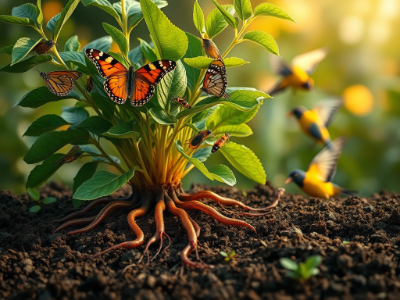
The sage knows that all living things are connected. Roots of a plant need rich soil to grow. Worms eat its roots while butterflies eat its leaves. Birds eat butterflies and animals eat plants. Humans eat all of these but eventually pass away and return to the soil.
The roots of Crow’s Feet turn into maggots, and their leaves turn into butterflies. Before long, the butterflies are transformed and turn into insects that live under the stove; they look like snakes, and their name is Qutuo. After a thousand days, the Qutuo insects become birds called Dried Leftover Bones.
Jiuyou bugs are born from Mourui bugs, and Mourui bugs are born from Rot Grubs, and Rot Grubs are born from Sheep’s Groom. Sheep’s Groom couples with bamboo that has not sprouted for a long while and produces Green Peace plants. Green Peace plants produce leopards, and leopards produce horses, and horses produce men. Men in time return again to the mysterious workings. So all creatures come out of the mysterious workings and go back into them again.”
Conclusion
What is happiness? Humanity values wealth, reputation, and power. However, these things do not guarantee happiness and can actually prevent it. Wealth brings a hectic life and worry about protecting possessions. The sage finds happiness in the state of Wu Wei or effortless action. They only take action after much reflection when it seems natural in the moment. The sage keeps life and death in proper perspective and realize that they are part of nature. Individuals have different needs due to their biology, but are still connected as part of nature.
Resource
Complete Works Of Chuang Tzu, Burton Watson, translator. Columbia University Press, 1968. A good and classic translation of Chuang Tzu.
The book Zhuangzi is an essential text in Daoism. Chapter Seventeen, Fit for Emperors and Kings, describes having an expansive perspective on life and seeing the unity of all things. The sage seeks emptiness and sees that there is truly no division between life and death, right and wrong, or past and present. This chapter differs significantly from the inner chapters because it focuses on one long conversation between the Yellow River and the North Sea.
Pride
During the Autumn floods, streams poured into the Yellow River making it overflow its banks. The Lord of the River was full of pride at how powerful he had become. However, when he made it to the North Sea he became humbled by its vastness.
“The time of the autumn floods came, and the hundred streams poured into the Yellow River. Its racing current swelled to such proportions that, looking from bank to bank or island to island, it was impossible to distinguish a horse from a cow. Then the Lord of the River! was beside himself with joy, believing that all the beauty in the world belonged to him alone. Following the current, he journeyed east until at last he reached the North Sea.”
Perspective
Ruo of the North Sea was so vast that it gave the Yellow River a more expansive perspective. He realized that he had been so vain. This is a common occurrence with many not seeing the big picture. A frog in the well can’t understand the ocean. An insect in the summer has no conception of winter. A scholar locked into their own beliefs can’t understand the Way.
“Ruo of the North Sea said, ‘You can’t discuss the ocean with a well frog—he’s limited by the space he lives in. You can’t discuss ice with a summer insect—he’s bound to a single season. You can’t discuss the Way with a cramped scholar—he’s shackled by his doctrines. Now you have come out beyond your banks and borders and have seen the great sea—so you realize your own pettiness.’”
Large v. Small
This expanded perspective also means that size doesn’t matter. A small amount of time is just as important as a large. A near place as important as a far place. Short as meaningful as long.
“Therefore great wisdom observes both far and near, and for that reason, it recognizes small without considering it paltry, recognizes large without considering it unwieldy, for it knows that there is no end to the weighing of things.”
Past v. Present
With this expanded perspective, one realizes that there is no division between past and present. Time is connected and flows on unceasingly.
“It has a clear understanding of past and present, and for that reason, it spends a long time without finding it tedious, a short time without fretting at its shortness, for it knows that time has no end.”
Life and Death
Because time always continues, death need not be feared. The time a person is alive does not compare to the time before they were born.
“Calculate the time he is alive, and it cannot compare with the time before he was born. Yet the time before he was born. Yet man takes something so small and tries to exhaust the dimensions of something so large!”
Life has a natural rhythm in which all things progress. They are born, grow, decay, and finally die.
“The Way is without beginning or end, but things have their life and death—you cannot rely on their fulfillment. One moment empty, the next moment full—you cannot depend on their form. The years cannot be held off; time cannot be stopped. Decay, growth, fullness, and emptiness end and then begin again. It is thus that we must describe the plan of the Great Meaning and discuss the principles of the ten thousand things.”
Right v. Wrong
One with proper perspective realizes that both right and wrong are subjective and vary from society to society. What is considered right in one culture is wrong in another.
“He knows that no line can be drawn between right and wrong, no border can be fixed between great and small.“
“From the point of view of preference, if we regard a thing as right because there is a certain right to it, then among the ten thousand things there are none that are not right. If we regard a thing as wrong because there is a certain wrong to it, then among the ten thousand things there are none that are not wrong.“
Usefulness
Expanding perspective helps the sage understand that nothing is truly useless. Usefulness depends on the point of view of the individual.
“From the point of view of function, if we regard a thing as useful because there is a certain usefulness to it, then among all the ten thousand things there are none that are not useful. If we regard a thing as useless because there is a certain uselessness to it, then among the ten thousand things there are none that are not useless.”
Usefulness also depends on the specific circumstances of the situation. Somethings will work in certain situations but not others. A beam can be used to break a wooden door, but not to plug up a small hole.
“A beam or pillar can be used to batter down a city wall, but it is no good for stopping up a little hole—this refers to a difference in function. Thoroughbreds like Qiji and Hualiu could gallop a thousand li in one day, but when it came to catching rats, they were no match for the wildcat or the weasel—this refers to a difference in skill. The horned owl catches fleas at night and can spot the tip of a hair, but when daylight comes, no matter how wide it opens its eyes, it cannot see a mound or a hill—this refers to a difference in nature. ”
All beings have different needs. The frog is happy in a small well while the great turtle is happiest in the wide sea.
“What fun I have! I come out and hop around the railing of the well, or I go back in and take a rest in the wall where a tile has fallen out. When I dive into the water, I let it hold me up under the armpits and support my chin, and when I slip about in the mud, I bury my feet in it and let it come up over my ankles. I look around at the mosquito larvae and the crabs and tadpoles, and I see that none of them can match me. To have complete command of the water of one whole valley and to monopolize all the joys of a caved-in well—this is the best there is! Why don’t you come some time and see for yourself?“
“But before the great turtle of the Eastern Sea had even gotten his left foot in the well, his right knee was already wedged fast. He backed out and withdrew a little, and then began to describe the sea. ‘A distance of a thousand li cannot indicate its greatness; a depth of a thousand fathoms cannot express how deep it is.”
The sage realizes that all act according to their nature. The millipede moves with ten thousand legs while the snake moves using its backbone. The wind moves without any physical form.
“’Now how in the world do you manage to work all those ten thousand legs of yours?’ The millipede said, ‘You don’t understand. Haven’t you ever watched a man spit? He just gives a hawk and out it.’”
“The snake said, ‘It’s just the heavenly mechanism moving me along—how can I change the way I am? What would I do with legs if I had them?’”
“The snake said to the wind, ‘I move my backbone and ribs and manage to get along, though I still have some kind of body. But now you come whirling up from the North Sea and go whirling off to the South Sea, and you don’t seem to have any body.”
Harmony
If one has an expansive perspective they see the connection of all things. The sage seeks harmony and balance. They do not harm others, yet don’t flaunt their pacifism. They do not seek profit but don’t condemn others for doing so. They do not accumulate possessions, yet don’t brag about their un-attachment. They do not ask for help, but don’t tout their self sufficiency. They do not seek fame, but do not judge others that do. They live simply with what has been given to them.
“Therefore the Great Man in his actions will not harm others, but he makes no show of benevolence or charity. He will not move for the sake of profit, but he does not despise the porter at the gate. He will not wrangle for goods or wealth, but he makes no show of refusing or relinquishing them. He will not enlist the help of others in his work, but he makes no show of being self-supporting, and he does not despise the greedy and base.“
In a state of harmony one can tell the difference between safety and danger. One can accept both fortune and misfortune. In this way the sage does not allow negative circumstances to harm them because they don’t see them as negative. They are simply part of the up and downs of life.
“He who understands the Way is certain to have command of basic principles. He who has command of basic principles is certain to know how to deal with circumstances. And he who knows how to deal with circumstances will not allow things to do him harm. When a man has perfect virtue, fire cannot burn him, water cannot drown him, cold and heat cannot afflict him, birds and beasts cannot injure him. I do not say that he makes light of these things. I mean that he distinguishes between safety and danger, contents himself with fortune or misfortune, and is cautious in his comings and goings. Therefore nothing can harm him.“
Nature v. Humanity
The sage follows the way of nature and not the way of humanity. Nature gives us life, physical form, and a set of skills and limitations. Humanity gives us culture and rules.
“’What do you mean by the Heavenly and the human?’” Ruo of the North Sea said, ‘Horses and oxen have four feet—this is what I mean by the Heavenly. Putting a halter on the horse’s head, piercing the ox’s nose—this is what I mean by the human.’”
The sage does not allow human values such as fame and desire to keep one away from following their own nature.
“So I say: do not let what is human wipe out what is Heavenly; do not let what is purposeful wipe out what is fated; do not let [the desire for] gain lead you after fame. Be cautious, guard it, and do not lose it—this is what I mean by returning to the True.”
Success Depends on Circumstances
The sage recognizes that circumstances play an oversized role in success or failure. Often one has to be at the right time and place to be successful.
“For a long time I have tried to stay out of the way of hardship. That I have not managed to escape it is due to fate. For a long time I have tried to achieve success. That I have not been able to do so is due to the times. It is time and circumstance that make it so.”
“My fate has been decided for me.”
Refuse Responsibility
The sage is not interested in power or leadership. They refuse such roles and stick to the way of nature.
“Once, when Zhuangzi was fishing in the Pu River, the king of Chu sent two officials to go and announce to him: ‘I would like to trouble you with the administration of myrealm.’ Zhuangzi held on to the fishing pole and, without turning his head, said, ‘I have heard that there is a sacred tortoise in Chu that has been dead for three thousand years. The king keeps it wrapped in cloth and boxed, and stores it in the ancestral temple. Now would this tortoise rather be dead and have its bones left behind and honored? Or would it rather be alive and dragging its tail in the mud?’ ‘I would rather be alive and dragging its tail in the mud,’ said the two officials. Zhuangzi said, “Go away! I’ll drag my tail in the mud!”
Conclusion
The sage seeks an expanded perspective viewing the unity of all things. There is no real division between large and small, past and present, right and wrong, or life and death. Life simply follows the rhythm of birth, aging, and death. Nothing is truly useless. All beings have different needs according to their nature. The sage seeks harmony and follows the way of nature and not the way of humanity which includes power, pride, and fame.
Master Zhuang is the second most influential writer in Daoism and the book Zhuangzi was named after him. Chapter Seven is Fit for Emperors and Kings and describes what leadership should look like.
Manipulation
Some leaders try to convince others to join them by being kind, making friends, and building relationships. The sage makes no effort to convince others. They simply exist in the moment and accept life as it is.
“Youyu was no match for the clansman Tai. The clansman Youyu still held on to benevolence and worked to win men over. He won men over all right, but he never got out into [the realm of] ‘notman.’ The clansman Tai, now—he lay down peaceful and easy; he woke up wide-eyed and blank. Sometimes he thought he was a horse; sometimes he thought he was a cow. His understanding was truly trustworthy; his virtue was perfectly true. He never entered [the realm of] ‘nonman.”
Rules
Most leaders create rules and regulations for their followers to ensure proper behavior. The sage resists making rules, but ensures they are correct before they act. Even then, they still only act in a limited way to create space for others to live.
“When the sage governs, does he govern what is on the outside? He makes sure of himself first, and then he acts. He makes absolutely certain that things can do what they are supposed to do, that is all.”
Freedom
Many leaders lord it over others. The sage goes along with life and doesn’t allow their personal views to affect others. They influence others but don’t let people depend on them. They give others freedom to live their life.
“Let your mind wander in simplicity, blend your spirit with the vastness, follow along with things the way they are, and make no room for personal views—then the world will be governed.”
Do Nothing At All
The sage does not try to move quickly or gain strength. They do not strive or study. It seems as if they do nothing at all, yet everything gets accomplished. They are not arrogant. They do not seek fame, plan, scheme, or seek out wisdom. They are content with what they have.
“Lao Dan said, “The government of the enlightened king? His achievements blanket the world but appear not to be his own doing. His transforming influence touches the ten thousand things, but the people do not depend on him. With him there is no promotion or praise—he lets everything find its own enjoyment. He takes his stand on what cannot be fathomed and wanders where there is nothing at all.”
Emptiness
The sage is connected to the earth. They are calm, still, and reflective. They are of this world yet aware of all existence. They adapt to the situation and seek balance. They are empty and do not get entangled. They do not try to understand the external world but attempt to become empty inwardly.
“Just now I appeared to him with the Pattern of Earth—still and silent, nothing moving, nothing standing up.Just now I appeared to him as Heaven and Earth—no name or substance to it, but still the workings, coming up from the heels.Just now I appeared to him as the Great Vastness Where Nothing Wins Out. Where the swirling waves! gather, there is an abyss.Just now I appeared to him as Not Yet Emerged from My Source. I came at him empty, wriggling and turning, not knowing anything about ‘who’ or ‘what,’ now dipping and bending, now flowing in waves.”
Conclusion
The sage does not try to convince others to their cause. They exist in the moment. They do not create rules for others to follow but only take limited action. They positively influence others but never manipulate them. The give others the space to be themselves. The sage does not strive yet accomplishes everything that is needed. The sage works towards emptiness. They are calm, reflective, and do not get entangled. They are a mirror reflecting things around them.
“Do not be an embodier for fame; do not be a storehouse of schemes; do not be an undertaker of projects; do not be a proprietor of wisdom. Embody to the fullest what has no end and wander where there is no trail. Hold on to all that you have received from Heaven, but do not think you have gotten anything. Be empty, that is all. The Perfect Man uses his mind like a mirror—going after nothing, welcoming nothing, responding but not storing. Therefore he can win out over things and not hurt himself. ”
Master Zhuang is the second most influential writer in Daoism and the book Zhuangzi was named after him. Chapter Six is The Great and Vulnerable Teacher and describes how the sage becomes one with the Dao. Other terms for the sage are the perfect man, holy man, and true man.
Description of the Way
The Dao is the way of the universe. It is formless, invisible, and the root of all things. It was from before creation and gave form to creation. It has always been here but is not considered old.
“Before Heaven and earth existed, it was there, firm from ancient times. It gave spirituality to the spirits and to God; it gave birth to Heaven and to earth. It was born before Heaven and earth, and yet you cannot say it has been there for long; it is earlier than the earliest time, and yet you cannot call it old.”
Emptiness
The sage becomes one with the Dao when they achieve an empty state. In this state, they are part of the world but also withdrawn.
“He was vast in his emptiness but not ostentatious. Tolerant he seemed to be part of the world; towering alone, he could be checked by nothing; withdrawn, he seemed to prefer to cut himself off; bemused, he forgot what he was going to say.”
To reach emptiness, one must be willing to let go of the cares of the world, possessions, and life itself.
“So I began explaining and kept at him for three days and after that he was able to put the world outside himself. When he had put the world outside himself, I kept at him for seven days more, and after that he was able to put things outside himself. When he had put things outside himself, I kept at him for nine days more, and after that he was able to put life outside himself.“
When the sage reaches this state, past and future fade away. They are in the present moment and are unconcerned about life or death. They are simply living in the moment.
“After he had managed to see his own aloneness, he could do away with past and present, and after he had done away with past and present, he was able to enter where there is no life and no death.”
The Only Constancy is Change
The sage accepts that change is the only constancy of life. Major changes include birth, growth, aging, and death.
“But if you were to hide the world in the world, so that nothing could get away, this would be the final reality of the constancy of things. You have had the audacity to take on human form, and you are delighted. But the human form has ten thousand changes that never come to an end.“
“In the process of change, he has become a thing [among other things], and he is merely waiting for some other change that he doesn’t yet know about. Moreover, when he is changing, how does he know that he really is changing? And when he is not changing, how does he know that he hasn’t already changed?”
The sage is willing to accept any change including an early death or a long life.
“He delights in early death; he delights in old age; he delights in the beginning; he delights in the end.“
The sage makes no plans. They accept gain or loss, and live with no regrets. They find contentment in small things and do not let loss affect them.
“The True Man of ancient times did not rebel against want, did not grow proud in plenty, and did not plan his affairs. A man like this could commit an error and not regret it, could meet with success and not make a show.”
The Sage is unconcerned with success or failure and sees them both as fate.
“I was pondering what it is that has brought me to this extremity, but I couldn’t find the answer. My father and mother surely wouldn’t wish this poverty on me. Heaven covers all without partiality; earth bears up all without partiality—heaven and earth surely wouldn’t single me out to make me poor. I try to discover who is doing it, but I can’t get the answer. Still, here I am—at the very extreme. It must be fate.”
Life and Death
The sage doesn’t waste energy on trying to figure out why they are alive or when they will die. They remain calm in the face of adversity.
“Mengsun doesn’t know why he lives and doesn’t know why he dies. He doesn’t know why he should go ahead; he doesn’t know why he should fall behind.”
When Master Yu suffered illness he held no resentment. He knew that his life would eventually end and he would return to the Dao.
“If the process continues, perhaps in time he’ll transform my left arm into a rooster. In that case I’ll keep watch during the night. Or perhaps in time he’ll transform my right arm into a cross-bow pellet, and I’ll shoot down an owl for roasting. Or perhaps in time he’ll transform my buttocks into cartwheels. Then, with my spirit for a horse, I’ll climb up and go for a ride. What need will I ever have for a carriage again?”
The sage is content with the time they have to live. By being content emotions such as happiness and joy can not affect you.
“I received life because the time had come; I will lose it because the order of things passes on. Be content with this time and dwell in this order, and then neither sorrow nor joy can touch you.”
“They look on life as a swelling tumor, a protruding wen, and on death as the draining of a sore or the bursting of a boil. To men such as these, how could there be any question of putting life first or death last?”
The Non-Sage
It is helpful to contrast the sage with the non-sage. The non-sage gets lost in the passion of their daily life. They strive to succeed, become wealthy, or get fame. They are always busy and plan out their days to ensure success.
“Deep in their passions and desires, they are shallow in the workings of Heaven.“
“Therefore he who delights in bringing success to things is not a sage; he who has affections is not benevolent; he who looks for the right time is not a worthy man; he who cannot encompass both profit and loss is not a gentleman; he who thinks of conduct and fame and misleads himself is not a man of breeding.”
Conclusion
A person can be compared to a piece of metal being cast by a smith. The metal can not demand to be made into a sword or other object but must accept their fate according to the wishes of the smith. In the same way, the sage accepts the changes in their life. They do not allow events such as success, failure, illness, health, a long life, or a short life to affect them.
“When a skilled smith is casting metal, if the metal should leap up and say, ‘I insist on being made into a Moye! He would surely regard it as very inauspicious metal indeed.”
“Now, having had the audacity to take on human form once, if I should say, ‘I don’t want to be anything but a man! Nothing but a man!’ the Creator would surely regard me as a most inauspicious sort of person. So now I think of heaven and earth as a great furnace, and the Creator as a skilled smith. Where could he send me that would not be all right? I will go off to sleep peacefully, and then with a start, I will wake up.”
Master Zhuang is the second most influential writer in Daoism (Taoism) and the book Zhuangzi was named after him. Chapter Five is The Sign of Virtue Complete and describes what a sage looks like who is in a state of virtue.
Interconnectedness
One enters this state when they shift their perspective to be in harmony with the Dao.
“Men do not mirror themselves in running water—they mirror themselves in still water. Only what is still can still the stillness of other things.”
“ Massive and great, he perfects his Heaven alone.”
They can be in harmony by viewing all of creation as interconnected. The Dao becomes a guide and one sees the unity of all things.
“But if you look at them from the point of view of their sameness, then the ten thousand things all are one. A man like this doesn’t know what his ears or eyes should approve—he lets his mind play in the harmony of virtue.“
Admit Faults
Those approaching virtue admit to their faults and do not make excuses for their past behavior. They do not care for fame or reputation.
“People who excuse their faults and claim they didn’t deserve to be punished—there are lots of them. But those who don’t excuse their faults and who admit they didn’t deserve to be spared—they are few.To know what you can’t do anything about and to be content with it as you would with fate—only a man of virtue can do that.”
In the Moment
They are focused on the moment and do not allow joy or sorrow to affect them. They simply let things be as they are.
“When I talk about having no feelings, I mean that a man doesn’t allow likes or dislikes to get in and do him harm. He just lets things be the way they are and doesn’t try to help life along.”
They make no plans and do not allow loss to affect them. They do not care for profit, but only are concerned with being in harmony with the Dao.
“The sage hatches no schemes, so what use has he for knowledge? He does no carving, so what use has he for glue? He suffers no loss, so what use has he for favors? He hawks no goods, so what use has he for peddling? These four are called Heavenly Gruel.”
The Body
If someone has virtue the body is unimportant. It does not matter if someone is ugly, poor, or powerless. A man of virtue named Ai Taituo was considered ugly and was not powerful or wealthy. However, women wanted to be near him and the rich wanted him to run their estates.
“Therefore, if virtue is preeminent, the body will be forgotten. But when men do not forget what can be forgotten but forget what cannot be forgotten—that may be called true forgetting.“
Physical disabilities or limitations are unimportant. The body is simply seen as a dwelling.
“As for things, he sees them as one and does not see their loss. He regards the loss of a foot as a lump of earth thrown away.”
Life and Death
In this state one is unconcerned about life and death or the events of the day. The world could come to an end and it would not affect them.
“Life and death are great affairs, and yet they are no change to him. Though heaven and earth flop over and fall down, it is no loss to him. He sees clearly into what has no falsehood and does not shift with things. He takes it as fate that things should change, and he holds fast to the source.”
They do not fear death but see life and death as part of the Dao. Wang Tai was in virtue and many wanted to be his disciples. It didn’t matter that he had been a criminal or that he didn’t formally teach.
“Why don’t you just make him see that life and death are the same story, that acceptable and unacceptable are on a single string? Wouldn’t it be good to free him from his handcuffs and fetters?”
Conclusion
The Sage is one who is in a state of virtue. One enters this state when they are in harmony with the Dao and view all of creation as interconnected. They can admit their faults and do not care for fame or wealth. They live in the moment and do not allow sorrow to affect them. It doesn’t matter if the person is ugly, poor, or without power. They are not concerned with death and see the body as a dwelling.
“Life, death, preservation, loss, failure, success, poverty, riches, worthiness, unworthiness, slander, fame, hunger, thirst, cold, heat—these are the alternations of the world, the workings of fate. Day and night they change place before us, and wisdom cannot spy out their source. Therefore, they should not be enough to destroy your harmony.”
























 Daoism