Zhuangzi Chapter 4: In the World of Men

Master Zhuang is the second most influential writer in Daoism (Taoism) and the book Zhuangzi was named after him. Chapter Four is In the World of Men and teaches how to reform someone without virtue.

Reforming One without Virtue

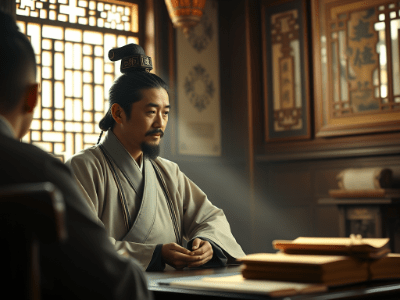
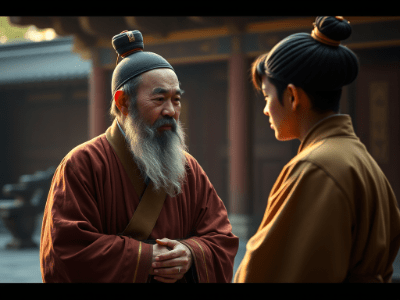
The Zhuangzi used historical figures such as Confucius to teach about the Dao. Yan Hui asked Confucius for permission to go to Wei to reform a violent ruler. Confucius advised against going, warning that he likely would be killed.

If he was fortunate enough not to be executed, he would probably still fail. Rulers are experts at bringing others to their side and can convince others to support them. Besides, one should be sure they have virtue in themselves before you try to reform others.

Yan Hui asked if he could reform the ruler by being resolute. Confucius responded that the ruler may make outward signs of reform but would never truly do so.

Not giving up easily, Yan Hui suggested outwardly agreeing with the ruler but remaining inwardly resolute. He could quote the words of historical teachers. Confucius responded, that he may avoid punishment, but would still not convert the tyrant.

The Daoist Approach

The Daoist approach to reform others is to be resolute inwardly and follow your own way. Don’t be motivated by fame or look for personal gain. Forget ego and be in a state of emptiness. Give the person advice only if they are willing to listen, otherwise remain silent.

Yan He wanted to reform the prince of Wei. Ju Boyu advised him to support the prince’s actions outwardly, but to be careful not to get drawn into his actions so much as be condemned by others.

The Ambassador

Ambassador Zigao of She asked Confucius for advice on his upcoming mission. Confucius reminded Zigao of the two great decrees: the duty to parents and to the nation. However, the greatest virtue is not to allow outside factors to affect your personal way and accept that there are things that you can not change.

Confucius went on to give advice on being a messenger. A messenger feels pressure to please both sides by exaggerating the positives. Exaggeration is irresponsible and reduces credibility. Inaccurate words can put the messenger in danger.

The messenger should never go beyond their orders or press too hard for agreement. A lasting agreement takes time and a bad agreement is hard to change. One should accept what you can’t change and focus on your own personal way.

Usefulness

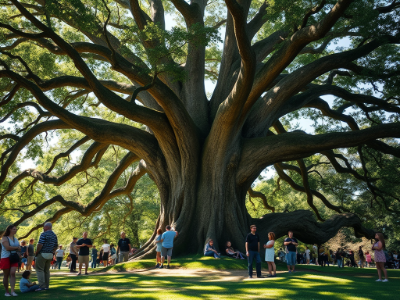
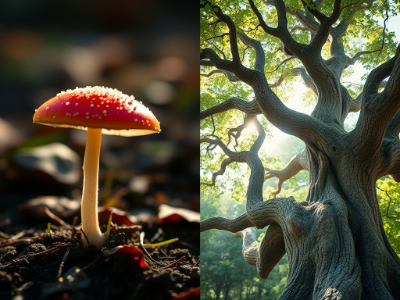
Trees feature prominently in Daoist thought. The carpenter Shi went to Qui and saw an enormous oak tree with its lowest branches 80 feet off the ground. He called the tree worthless because it could not be used for timber, boats, or doors. Shi had a dream where the Oak tree visited saying it was not useless because it sheltered hundreds of people. Besides, “useful” trees do not get to live out their normal lifespan because they are cut down prematurely.

In a similar episode, Ziqi of Nanbo saw a large tree in which thousands of horses could take shelter. Even though its gnarled and pitted limbs made it “useless” as timber, it was used by Holy Men for gatherings.

A disabled man named Shu had a twisted body and could not stand straight. He survived by washing other people’s clothes and getting handouts. In-spite of his physical disabilities he got by and lived out his normal years. He avoided conscription by the army and his physical disability paled in comparison to a disability of virtue.

Finally, Jie Yu was called the madman of Chu because he would cry out in public that the past was gone and the future would never arrive. The sage succeeds with the Dao and simply survives without it. No one can truly know the usefulness of something.

Conclusion

Trying to reform others can be dangerous and lead to failure. One must be sure in their own virtue before reforming others. The best approach is to be inwardly resolute and following your own personal way. Don’t be motivated by fame and only give advice if the other person is willing to listen.

A messenger should never exaggerate or press for an agreement. Twisted trees may appear useless but often have an unforeseen purpose living out its normal years. Twisted virtue is much worse than having a twisted body.
Zhuangzi Chapter 3: The Secret of Caring for Life

Master Zhuang is the second most influential writer in Daoism (Taoism) and the book Zhuangzi was named after him. Chapter Three is entitled The Secret of Caring for Life and describes how best to live in the world. This is a very short chapter but has three important parables.

Knowledge v. Lifespan

The sage acknowledges that they have a limited lifespan and can’t possibly know everything. One should never believe they have all the answers and are always right. Instead, remain grounded, avoid fame, and try not to break the law. Take care of your family and be content with the life that you have.

Parable of the Butcher

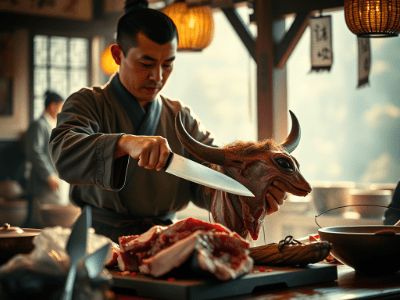
The parable of the butcher provides a valuable lesson on completing tasks. In the parable a butcher carved up oxen year after year without ever dulling his knife because he was always in the flow. When attempting a new task, one is often clumsy and hyper-focused. They perceive the task using their eyes and try to figure out how to do it. When the task is especially difficult they will size up the challenge, work carefully, and go slow.

The sage completes tasks by entering a state of Wu Wei or “effortless action.” This goes beyond being skillful or perceiving with the eyes. Instead it uses intuition to go along with the natural contours of the task. The person no longer does an action, but the action does itself.

Parable of the Commander

The parable of the commander teaches a lesson on freedom of choice. In the story a military commander has been punished by having one of his foots amputated. He was asked if this was done by man or heaven. He answers that it was done by heaven. Taoism teaches that people are not happy unless they have freedom of choice. However, the sage recognizes that choices often have severe consequences. The commander’s poor choices led to his punishment.

Parable of the Mourner

The parable of the mourner illustrates the natural progression of life. In it a person mourned a friend by yelling three times and then leaving. Others asked if the mourner should have done more for such a close friend? Shouldn’t he participate in the traditional mourning rituals? The mourner answered no because the sage recognizes that death is simply a part of the natural pattern of the Dao. People are born, grow, decay, and then die. One should be content with their lifetime and accept this pattern without grief.

Conclusion

The secret of caring for life is to realize that you will never have complete knowledge and it is foolish to believe otherwise. One should stay centered, be constant, focus on family, and be content with what you have. It is natural for people to want to make their own choices even when those choices lead to severe consequences. The pattern of the Dao includes birth and death and one should accept this in order to be content.

Zhuangzi Chapter 2: Discussion on Making All Things Equal

Master Zhuang is the second most influential writer in Daoism (Taoism) and the book Zhuangzi was named after him. Chapter Two is entitled Discussion on Making All Things Equal and describes how one can live in accordance with the Dao.

Great Understanding

The sage or wise person has great understanding of the Dao and shifts their focus to a more universal perspective. They do not let the stress of everyday life distract them.

The sage knows that their connection to the Dao is unique and different than any one else’s.

The sage is unhurried and goes along with the flow of life. They have a simple and uncomplicated existence.

Little Understanding

The foolish have little understanding of the Dao and live a busy, divisive, and complicated life. They are preoccupied with petty arguments and are convinced that they are always right. Consequently, they have high anxiety and find life difficult to manage.

They hurry through life without pausing or reflection and never have any satisfying accomplishments. This leaves them exhausted and unsatisfied.

Relativity of Life

The sage recognizes that life is relative. They recognize the concepts of right and wrong are dependent on the individual and situation.

What works for one person does not necessarily work for another. The characteristics of kindness and morality are often dependent on the society, individual, or situation.

The sage sees the unity of all things in the Dao and does not create artificial divisions.

Acceptance of Reality

The sage acknowledges that the Dao exists but does not waste their energy trying to define it. They do not get involved in needless arguments, but accepts life for what it is.

The sage is unaffected by strife and unconcerned about wealth, sickness, and death. They make themself one with the universe, live in simplicity, and allow things to be as they are.

The sage recognizes the absurdity of life and that they never will truly understand it.

Conclusion

The sage has great understanding of the Way. They find comfort in the midst of chaos. They stay grounded and live their life as it plays out. They make the most of their situation and realize that good and bad are relative to the individual and situation.

Zhuangzi Chapter 1: Free and Easy Wandering

Master Zhuang is the second most influential writer in Daoism (Taoism) and the book Zhuangzi was named after him. Chapter One is entitled Free and Easy Wandering and challenges our normal definition of usefulness. How useful a thing is depends on the sizes involved, lifespan, and purpose.

Usefulness Based on Size

Usefulness depends on the relative sizes involved. There was a bird who measured a thousand miles wide and flew for nine months straight. It found the wind very useful in order to fly long distances. There was a small cicada and dove who could barely fly to the next tree. They did not find the wind useful because they only traveled a few yards. A massive gourd was useless to carry water because it became too heavy, but it could be used as a boat to float down a river.

Usefulness Based on Lifespan

Usefulness is dependent on the lifespan involved. The morning mushroom does not see the twilight, the summer cicada does not see the spring. What was useful for these short lived beings are not useful to longer lived ones such as humans or animals.

Usefulness Based on Purpose

Usefulness also depends on the purpose a thing. A family had a secret recipe for chapped hands ointment and used it when bleaching silk in water. Over generations, they never made much money. They eventually sold the recipe to a traveler who gave it to soldiers to help them hold weapons during a battle. The army won and the king rewarded the traveler with much land. A gnarled and twisted tree may be worthless to a carpenter but may be perfect to provide shade. The same item is useless for one purpose but has much use for another.

Lesson for the Individual

Our personal circumstances often make it hard to see what is important in life. The small dove can’t understand why another would want to fly hundreds of miles because the dove only needs to travel a few yards. We often put significant value on our accomplishments even when they are relatively small. The dove may have an outsized pride in traveling just a few yards. A person shouldn’t take pride in their own accomplishments such as gaining fame, wealth, or power. The Daoist would say the individual shouldn’t be bothered by such things, but be content in finding usefulness in the everyday things around them.

Conclusion

Master Zhuang recognizes that usefulness is subjective to the time, space, and purpose. What may be useful for a large creature is not useful for a small one. What is useful for a long lived creature is not useful to a short lived one. Sometimes usefulness can be found by shifting the perspective of how to use a thing. At first it may seem worthless but it may just be looking for the right purpose. The individual should not find value in pride, fame, and power. Instead they should be content in finding usefulness all around them.

Resource

Complete Works Of Chuang Tzu, Burton Watson, translator. Columbia University Press, 1968. A good and classic translation of Chuang Tzu.

The Way

The Dao was in existence before creation.

It is changeless, runs in cycles, and has never ending energy.

The Dao created heaven, earth, and all things in existence.

It brought about the planets, universe, and sky. It has created plants, animals, insects, and creatures both large and small.

The Dao created the one which multiplied to all things in creation.

The Dao is in All Things

It can be found on earth, in heaven, and in nature. Nothing escapes it. It is in all of creation.

Nothing can escape the Dao. It is found everywhere.

Although the Dao is found in all things, it is also hidden. It has no form and can not be seen.

The Dao includes both existence and non-existence. Both creation and nothingness.

The Dao has both physical form and is without form.

It is so expansive and unknown that it is unfathomable to the human mind.

It is so complex that it can not adequately be described in human language.

True Virtue

The Dao is the source of all virtue and morality.

This virtue differs from so-called human morality which is capricious and based on different classes.

The Dao is yielding, yet it still has accomplished all of creation.

It never seeks acclaim or authority. It is humble and does not strive for greatness.

It is always impartial and never biased.

Conclusion

What is the Dao? It is the natural flow of the universe. It existed before creation and has never ending power. It created all things in existence and nothing can escape it. It has both form and no form, it is creation and nothingness. It is so complex that humans can not understand it or describe it in words. The Dao is the source of true virtue and never seeks authority.

Constancy

Constancy is important to grow closer to the Dao (Tao) and is major a theme throughout the Dao De Jing (Tao Te Ching). One may get closer to the Dao by simplifying their life, getting rid of unused possessions, meditating, and spending time in nature. This can help achieve peace of mind.

Beginning

Constancy is important when beginning to learn about the Dao. Just like a mighty tree starts from a tiny seed, a tall building starts with the foundation, all journeys begin with the first step. Constancy starts us down the path to explore the Dao.

Student of the Dao

The best student of the Dao has constancy. They listen to its way and follow its teachings. An average student listens but does not always follow. A poor student listens but laughs at the Dao.

Knowledge, Virtue, and the Dao

Once one gains knowledge, that knowledge leads to the virtues of humility, simplicity and being guided by nature.

Eventually these virtues lead to peace of mind and the Dao itself.

Once the connection with the Dao has grown, it will be found in all things in nature, no matter how large or small. This includes mountains, water, animals, insects, and plants.

Constancy is also important to stay connected with the Dao. Often people will almost reach their goal but not quite achieve it. The same applies to the journey of growing closer to the Dao.

Conclusion

Constancy helps one explore and grow closer to the Dao. The best students will both listen and follow the Dao. As one grows more aware of the Dao, they will gain important virtues such as humility and simplicity. This allows one to see the Dao in everyday life.

Yin Yang

The Yin Yang symbol is well know in popular culture and can be found on all sorts of items from t-shirts to tattoos. While it is an essential part of Daoism (Taoism), it is often misunderstood. Many see Yin Yang as opposites like cold v. hot or good v. evil, but this is too simple a concept.

Complimentary Forces

Yin Yang do not so much oppose each other as they compliment one another. Yin is needed for Yang to exist. Without ugliness there can be no beauty. Without sour there can be no sweet. They shape each other and define each other.

Taking this even further creation and non-creation need each other. Creation comes from nothing and nothing comes from creation. Another way to say this is that being comes from non-being and non-being comes from being.

Constant Change

The interaction between Yin and Yang creates constant change making each moment unique. They create harmony by blending together. Some days its hotter, other days colder. Some days you are more social and other days more reserved.

Yielding

Although there is a time and place for assertive action, the Dao teaches that it is also necessary to yield. The Dao does not contend, but still achieves. It is laid back, but still plans. The concept of Wu Wei, or effortless action, illustrates this concept. One should go with the flow of life and act only when it is effortless and compliments the Dao.

Lessons for Government

Nations should also abide by the Dao. Laozi (Lao Tzu) taught that nations should follow Wu Wei and be willing to yield to one another. Larger nations should not dominate smaller ones, because this leads to push back and conflict. Larger nations should be willing to yield and accommodate smaller ones to create positive and long lasting relationships.

Lessons for the Individual

The constant change of Yin and Yang has important implications for the individual. It is foolish to think that life will always remain the same. Yin and Yang are constantly interacting creating change. The individual should assume that change is constant and develop a flexible attitude staying in the moment and reacting accordingly.

A person should be willing to embrace both Yin and Yang. Sometimes they should be outgoing while other time more reserved and contemplative. They should embrace both the masculine and feminine.

Wu Wei

One should live according to the Way by using Wu Wei or “effortless action.” This involves not forcing but accomplishing without doing. In most cases, no action should be taken. In rare cases, an action may be taken after much reflection. However, any action should be as minimal as possible.

Non-Striving

Wu Wei never strives. It is never forced. It is easy, yet resolves difficult situations. All great accomplishments must begin with a small action. It does not struggle for greatness but still achieves it. It teaches by example and avoids unnecessary words (Dao De Jing, Chapters 3, 6, 38, 43, 48, 63, and 77).

Non-action

Wu Wei is non-action. It does without doing, works without working, and talks without talking. It does not speak or call, yet all come to it. It decreases efforts and does not take useless action. It does not seek praise (Dao De Jing, Chapter 24, 48, and 77).

Yielding

Wu Wei is the “Virtue of not Contending.” It yields to avoid a reaction. The Law of Aggression states that aggressive acts provokes even more aggression. Wu Wei does not injure but still accomplishes. If you force something you will destroy it. If you grasp something you will lose it (Dao De Jing, Chapter 22, 64, 68, 69, 73, 77 and 81; Taoism: The Parting of the Way, Holmes H. Welch Jr.).

Government

Wu Wei also applies to the government. The government can press without marching, seize without using weapons, and push without opposing. Leaders should never take power in order to tamper with society. They are not fit to lead. One should never boast and never use violence to attain power (Dao De Jing, Chapters 30, 48, 57, and 69).

Minimal Action

Wu Wei achieves its desired outcome and then stops. It does not force, destroy, or act arrogantly. It does not boast or use violence (Dao De Jing, Chapter 30)

Conclusion

Wi Wei is action aligned with the Dao. It never strives and is always easy. It takes action without action. It yields to others to avoid aggression. It guides leaders to accomplish without using violence. It always takes the minimal action and then stops.

Emptiness

The Dao De Jing (Tao Te Ching) outlines how one can live in accordance with the “Way” of the universe. One manner of doing this is using meditation to reach a state of emptiness. This can provide peace of mind and allow a person to get the most out of each moment.

Value in Emptiness

The importance of emptiness is illustrated by the wheel hub, clay vessel, and the house. Their value lies in their emptiness and not the physical structure itself.

Infant State

This state can help you return to your infant state and is like losing your self and going beyond yourself. Sometimes it is translated as the “uncarved block.” When one reaches absolute emptiness, they can consider and examine all things in the universe and reach enlightenment (Dao De Jing, Chapters 13, 16, and 28).

The Inner Light

George Harrison referenced the concept of emptiness in the Beatle’s song, “The Inner Light.”

Compassion

The Dao De Jing (Tao Te Ching) outlines how one can live in accordance with the “Way” of the universe. Compassion is considered one of the three treasure of the Dao (Tao). Those with compassion will succeed in life and become strong. They will win in conflict and be able to defend themselves.

Taking Care of Others

A wise person makes sure that others don’t feel alone and isolated. Having compassion for others means making sure that all people have what they need.

Being Good to All

Compassion means being good to those who are not good. One should be faithful to those who are not faithful. Compassion gives the virtue of faithfulness and sincerity (Dao De Ching, Chapter 49).

Protecting the Weak

Compassion allows one to see the small and protect the weak. In this way using compassion is following the Tao and will benefit both you and others (Tao Te Ching, Chapter 52).

Conclusion

Compassion is a treasure that will allow one to succeed in life and be protected. It involves protecting others and making sure no one is discarded. Compassion can also be challenging because it requires one to be good to those who are not good.