
Wenzi Chapter 1: The Origin of the Way

Some have named the Wenzi (Wen Tzu) the fourth most influential Daoist text after the Dao De Jing, Zhuangzi, and Liezi. However scholars have questioned its authenticity because it contains Confucian, Legalist, and Mohist philosophies. (Creativity and Intertextuality, pages 8, 23, 25, 32, 61-65, 81, and 84).

Chapter One is named The Origin of the Way and discusses the mystery that is the Dao along with flexibility, effortless action, and emptiness.

The Dao

The Dao was in existence before creation. Existence came out of non-existence.

It has no form and makes no noise.

Although it is formless it creates sounds, colors, and flavors.

It manifests itself through nature and creates harmony between light and dark, large and small, flexibility and firmness.

It is found in all existence and unifies all things.

Flexibility

The sage is one who follows the way. A sage follows the way by being flexible and yielding. A sage is willing to change course based on the circumstances.

They never act in preconditioned patterns but instead react to circumstances. This allows one to be successful and avoid harm.

The sage remains humble and knows that humility allows them to overcome obstacles in their life.

By remaining humble they protect themselves because others are not threatened by them.

Life is flexible while death is inflexible.

Emptiness

A person is born into a state of emptiness but over time they become uncentered due to their experiences.

The sage seeks to return to this state where one has a clear mind, accepts their situation, and remains calm.

In this state the sage is not affected by desire or struggles in life. They are not distracted by sorrow or joy.

In emptiness one has inner balance and harmony.

They are formless and merge with the world.

True happiness is found in emptiness and harmony. It is not found in wealth or status.

Effortless Action

The sage doesn’t act rashly from a state of emptiness.

Instead they respond to their environment.

They only act when it is the right time.

They do not act based on logic, strategy, reason, or education.

Leadership

A true leader follows the Dao and acts in accordance with nature.

They do not rely on logic and are not arrogant nor cunning.

They give people freedom to be themselves and do not strive for power.

The sage does not wish to govern others but focuses inward on their connection to the Dao.

Conclusion

The Dao is formless and manifests itself in nature. It creates harmony and unifies all things. The sage follows the way by being flexible, yielding, and humble. The sage seeks the state of emptiness where one has a clear mind, accepts their situation, and remains calm. They are not affected by desire and are formless merging with the world. In this state, the sage acts effortlessly by responding to their environment at the right time. A true leader follows the Dao and gives people freedom to be themselves.

Consider how water is the softest element yet can’t be hurt, wounded, or burned. It is strong enough to penetrate any substance.

It is flexible in both its shape and purpose. It can be rain, dew, rivers, or lakes.

Water embraces all life without bias.

Resources

Wen-Tzu, Understanding the Mysteries, Thomas Cleary, Translator. 1991.
Liezi Chapter 8: The Tally of the Teaching

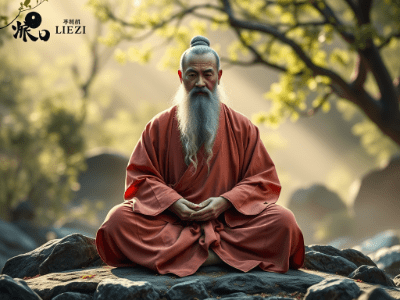
The Liezi is considered the third most important text in Daoism (Taoism) after the Dao De Jing and Zhuangzi. Chapter eight is named The Tally of the Teaching and focuses on living in accordance with the Dao.

Emptiness

The sage focuses on the internal in order to be in accordance with the Dao. They try to reach a state of emptiness.

Wu Wei

The sage recognizes the superiority of nature. They see themselves as part of nature and not above it.

They know that it is best to align their actions with nature by being in the moment and going with the flow. This Wu Wei or “effortless action” exerts less energy and causes one to be more successful.

They know that it is often better to take no action.

Events that seem negative can turn out to be positive in the long run.

External Things

The sage does not allow external things such as wealth, power, knowledge, or reputation distract them. They are not concerned with profit because it leads to conflict.

They know that status causes envy, power causes dislike, and wealth causes resentment.

The sage remains humble.

The sage avoids things that are valued.

A sage does not concern themself with reputation.

Leadership

A sage recognizes their own limitations and delegates important tasks to others.

In order to lead, one must be personally orderly.

They should be humble, detailed, and benevolent.

Conclusion

The sage focuses on the internal and reaching a state of emptiness. They are part of nature and engage in Wu Wei to flow with nature. This exerts less energy and causes one to be more successful. They know that it is often better to take no action.

The sage ignores external distractions such as wealth, power, knowledge, and reputation. They know that status and wealth cause envy. A leader should recognizes their limitations, delegate to others, and remain orderly on the inside.

Resource

The Book of Master Lie, Thomas Cleary, translator. 2011. A nice translation of Liezi.

Liezi Chapter 7: Yang Zhu

The Liezi is considered the third most important text in Daoism (Taoism) after the Dao De Jing and Zhuangzi. Chapter seven is named Yang Zhu and focuses on living in the moment.

Reputation, fame, and status

The sage does not worry about external factors such as reputation, fame, or status.

They know that reputation does not reflect reality. One may live generously but only have a good reputation after they die. One may live indulgently, but have a bad reputation after they die.

Fame and status are also artificial and have no lasting benefit.

Wealth

The sage knows that striving for wealth makes one unfulfilled.

The physical body is also a possession which one should not become attached.

It doesn’t matter if one values life, they will still die at their natural time. There is no point in worrying about death.

Worrying about a long life, fame, status, or wealth causes unneeded stress.

The future

The sage does not concern themselves with the future.

They don’t concern themselves with what happens after death.

Emptiness

The sage focuses on the internal by seeking a state of emptiness. This allows one to be a peace with the world.

They cultivate humility, generosity, and compassion.

Present moment

The sage finds contentment in the present moment.

The sage knows that the present moment is precious and fleeting.

Conclusion

The sage does not worry about the external. Reputation, status, fame and wealth are all artificial and leaves one unfulfilled. They do not concern themselves with the future because it creates unneeded anxiety.

Instead the sage focuses on the internal and seeks a state of emptiness. They are humble, generous, and compassionate and find contentment in savoring the present moment. One should surround themselves with pleasant sounds, environments, smells, and express themselves freely.

Resource

The Book of Master Lie, Thomas Cleary, translator. 2011. A nice translation of Liezi.

Liezi Chapter 5: Questions of Tang

The Liezi is considered the third most important text in Daoism (Taoism) after the Dao De Jing and Zhuangzi. Chapter five is named Questions of Tang.

The chapter includes mystical tales of immortal people, pearl forests, and gold buildings. Besides the fantastic imagery there is much about the sage and living according to the Dao.

The Dao

The Dao has no beginning and no ending.

It is limitless and infinite.

It makes up all things great and small. It includes heaven and earth and all beings within.

Uniqueness

Some things are so vast that they defy imagination such as the massive bird Peng or the huge fish Kun which were also found in Zhuangzi, Chapter 1.

Some things are so small that they can’t be seen.

Regardless of their size, all things are equal and unique, important in their own right.

Single mindedness

The sage is singleminded and therefore can accomplish much.

The sage is completely in the moment.

Adaptability

The sage adapts instantly to life’s challenges. They do not see events as good or bad but take life as it comes.

Social Harmony

Living with the Dao means to be in equality and harmony with others. The sage is not arrogant, nor contentious, and lives a full life. They do not rule over others.

The sage recognizes the relativity of different cultures and societies. They know that good and bad are often dependent on the person.

Emptiness

The sage focuses on the inside in order to navigate the world. They seek a state of emptiness.

Conclusion

The Dao is limitless and has no beginning. It makes up all things which are equal in the Dao.

The sage is singleminded and adapts to life. They live in harmony with others, are not arrogant, and do not rule others. They recognize the relativity of good and bad and focus on the internal in order to navigate the external world.

Resource

The Book of Master Lie, Thomas Cleary, translator. 2011. A nice translation of Liezi.

Liezi Chapter 4: Confucius

The Liezi is considered the third most important text in Daoism (Taoism) after the Dao De Jing and Zhuangzi. Chapter four is named Confucius and rejects external praise while focusing on internal truth.

Acceptance

The sage knows that social rules or customs are not the way to the Dao. Instead the sage accepts life as it comes with no preconditions.

The sage strives to be compassionate, adaptable, reflective, and reserved.

Profit and Loss

The sage does not care about praise or condemnation.

The sage does not worry about gain or loss.

They accept both life and death.

In this way pain, punishment, and loss have no effect.

Influence and Leadership

The sage influencers others without governing them.

Those who lead with power or control are not true leaders. They are ignorant of leadership and incompetent.

Emptiness

The sage does not rely on the five senses, but instead strives for a state of emptiness. The mind, body, and spirit become one with the Dao.

“Don’t dwell on yourself, and things will be clear. Like water in movement, like a mirror in stillness, like an echo in response, the Way is thus in harmony with people.”

Travel is not taking a journey, but is a focus inward seeking emptiness.

The sage opens themselves up to the universe. They are not aware of their own thoughts, actions, or speech.

Always Alive

The Dao is responsible for all creation.

One can achieve eternity when they are with the Dao. Even though their life ends it doesn’t truly perish.

Conclusion

The sage knows that artificial rules are unimportant. One should accept what comes. The sage is compassionate and does not seek praise.

They influence others but do not command. They strive for emptiness where mind and body become one. The Way is responsible for all creation and though life ends, it doesn’t truly perish.

Resource

The Book of Master Lie, Thomas Cleary, translator. 2011. A nice translation of Liezi.

Liezi Chapter 2: The Yellow Emperor

The Liezi is considered the third most important text in Daoism (Taoism) after the Dao De Jing and Zhuangzi. Chapter two is named The Yellow Emperor and focuses on living with the Dao. It shares many parables found in Zhuangzi including Feeding Monkeys (Zhuangzi, Chapter 2), Taming Tigers (Zhuangzi, Chapter 4), Shaman (Zhuangzi, Chapter 7), Ferryman, Archery Contest, Swimming at the Waterfall, Catching Cicadas, and Training a Fighting Cock (Zhuangzi, Chapter 19).

Emptiness

The sage becomes one with nature. This is called achieving a state of emptiness. There is no difference between self and the outside world.

Acceptance

The sage lives in a state of acceptance. They do not desire but follows the contour of life. They do not like or dislike but accept life for what it is.

Harmony with Others

The sage is in harmony with others. They are honest and do not get angry or intimidate.

The sage recognizes that people use knowledge to manipulate one another.

When one is in the Dao, others will want to be near them.

Accomplishing

When one is with the Dao they possess a single mindedness.

They can accomplish things that seem impossible.

When one does not fear life and death, they do not let concerns of the world bother them.

The reason people worry is that they are concerned with the results. The sage doesn’t let the troubles of the world affect them.

Sincerity

The Way is sincere. The sage always acts with pure intention.

Yielding

The sage knows that to yield is to win while the use of force is to fail. Flexibility is the ultimate state of being.

Government

When a nation follows the Dao there is no need for rules, leaders, or profit. The people no longer think about right or wrong but simply follow nature. There is no need for charity or hoarding because everyone has what they need.

A nation should always seek to avoid the use of force and instead yield if possible.

Conclusion

The sage achieves a state of emptiness by accepting whatever comes. They live in harmony with others and is always sincere. The sage seeks to always be flexible for they know that knows that yielding is winning while force is failure. There is a single mindedness that comes with the Dao that makes it possible to accomplish challenging tasks. In a similar way when a nation follows the Dao there is no need for leaders or laws. Everyone has what they require. The nation should always seek to avoid the use of force.

Resource

The Book of Master Lie, Thomas Cleary, translator. 2011. A nice translation of Liezi.

Zhuangzi Chapter 26: External Things

The book Zhuangzi is an essential text in Daoism. Chapter Twenty Six, External Things, rejects the human values of wealth, power, excess, and fame.

Wealth

The sage rejects things that humanity values such as wealth. They see that external things do not bring happiness. Instead they focus on the internal and reaching a state of emptiness.

Power

The sage rejects power and leadership. They are content with their daily life.

Excess

The sage rejects accumulating possessions and excess. They live life sticking to the necessities.

Fame

The sage rejects fame and does not value reputation. They remain humble and do not assume that they know what is right. They always reflect before taking action which makes success much more likely.

Knowledge

The sage knows the limit of human knowledge and does not feel the need to accumulate it. Instead they work towards emptiness and the unity of all things.

Emptiness

The state of emptiness is seeing the connection of all things. The sage stays focused on the Way.

This allows the sage to live in the world without becoming encumbered by it. The sage goes with the flow and does not force action. They accept the world for what it is.

In emptiness, one forgets skills, techniques, and human knowledge.

Conclusion

The sage rejects the human values of wealth, power, excess, and fame. They see that these external things do not bring happiness. They work towards emptiness and the connection of all things. This allows them to live the world without being bothered by it. They only act if necessary and after much reflection.

Resource

Complete Works Of Chuang Tzu, Burton Watson, translator. Columbia University Press, 1968. A good and classic translation of Chuang Tzu.

Zhuangzi Chapter 17: Autumn Floods

The book Zhuangzi is an essential text in Daoism. Chapter Seventeen, Fit for Emperors and Kings, describes having an expansive perspective on life and seeing the unity of all things. The sage seeks emptiness and sees that there is truly no division between life and death, right and wrong, or past and present. This chapter differs significantly from the inner chapters because it focuses on one long conversation between the Yellow River and the North Sea.

Pride

During the Autumn floods, streams poured into the Yellow River making it overflow its banks. The Lord of the River was full of pride at how powerful he had become. However, when he made it to the North Sea he became humbled by its vastness.

Perspective

Ruo of the North Sea was so vast that it gave the Yellow River a more expansive perspective. He realized that he had been so vain. This is a common occurrence with many not seeing the big picture. A frog in the well can’t understand the ocean. An insect in the summer has no conception of winter. A scholar locked into their own beliefs can’t understand the Way.

Large v. Small

This expanded perspective also means that size doesn’t matter. A small amount of time is just as important as a large. A near place as important as a far place. Short as meaningful as long.

Past v. Present

With this expanded perspective, one realizes that there is no division between past and present. Time is connected and flows on unceasingly.

Life and Death

Because time always continues, death need not be feared. The time a person is alive does not compare to the time before they were born.

Life has a natural rhythm in which all things progress. They are born, grow, decay, and finally die.

Right v. Wrong

One with proper perspective realizes that both right and wrong are subjective and vary from society to society. What is considered right in one culture is wrong in another.

Usefulness

Expanding perspective helps the sage understand that nothing is truly useless. Usefulness depends on the point of view of the individual.

Usefulness also depends on the specific circumstances of the situation. Somethings will work in certain situations but not others. A beam can be used to break a wooden door, but not to plug up a small hole.

All beings have different needs. The frog is happy in a small well while the great turtle is happiest in the wide sea.

The sage realizes that all act according to their nature. The millipede moves with ten thousand legs while the snake moves using its backbone. The wind moves without any physical form.

Harmony

If one has an expansive perspective they see the connection of all things. The sage seeks harmony and balance. They do not harm others, yet don’t flaunt their pacifism. They do not seek profit but don’t condemn others for doing so. They do not accumulate possessions, yet don’t brag about their un-attachment. They do not ask for help, but don’t tout their self sufficiency. They do not seek fame, but do not judge others that do. They live simply with what has been given to them.

In a state of harmony one can tell the difference between safety and danger. One can accept both fortune and misfortune. In this way the sage does not allow negative circumstances to harm them because they don’t see them as negative. They are simply part of the up and downs of life.

Nature v. Humanity

The sage follows the way of nature and not the way of humanity. Nature gives us life, physical form, and a set of skills and limitations. Humanity gives us culture and rules.

The sage does not allow human values such as fame and desire to keep one away from following their own nature.

Success Depends on Circumstances

The sage recognizes that circumstances play an oversized role in success or failure. Often one has to be at the right time and place to be successful.

Refuse Responsibility

The sage is not interested in power or leadership. They refuse such roles and stick to the way of nature.

Conclusion

The sage seeks an expanded perspective viewing the unity of all things. There is no real division between large and small, past and present, right and wrong, or life and death. Life simply follows the rhythm of birth, aging, and death. Nothing is truly useless. All beings have different needs according to their nature. The sage seeks harmony and follows the way of nature and not the way of humanity which includes power, pride, and fame.

Zhuangzi Chapter 7: Fit for Emperors and Kings

Master Zhuang is the second most influential writer in Daoism and the book Zhuangzi was named after him. Chapter Seven is Fit for Emperors and Kings and describes what leadership should look like.

Manipulation

Some leaders try to convince others to join them by being kind, making friends, and building relationships. The sage makes no effort to convince others. They simply exist in the moment and accept life as it is.

Rules

Most leaders create rules and regulations for their followers to ensure proper behavior. The sage resists making rules, but ensures they are correct before they act. Even then, they still only act in a limited way to create space for others to live.

Freedom

Many leaders lord it over others. The sage goes along with life and doesn’t allow their personal views to affect others. They influence others but don’t let people depend on them. They give others freedom to live their life.

Do Nothing At All

The sage does not try to move quickly or gain strength. They do not strive or study. It seems as if they do nothing at all, yet everything gets accomplished. They are not arrogant. They do not seek fame, plan, scheme, or seek out wisdom. They are content with what they have.

Emptiness

The sage is connected to the earth. They are calm, still, and reflective. They are of this world yet aware of all existence. They adapt to the situation and seek balance. They are empty and do not get entangled. They do not try to understand the external world but attempt to become empty inwardly.

Conclusion

The sage does not try to convince others to their cause. They exist in the moment. They do not create rules for others to follow but only take limited action. They positively influence others but never manipulate them. The give others the space to be themselves. The sage does not strive yet accomplishes everything that is needed. The sage works towards emptiness. They are calm, reflective, and do not get entangled. They are a mirror reflecting things around them.

Zhuangzi Chapter 6: The Great and Venerable Teacher

Master Zhuang is the second most influential writer in Daoism and the book Zhuangzi was named after him. Chapter Six is The Great and Vulnerable Teacher and describes how the sage becomes one with the Dao. Other terms for the sage are the perfect man, holy man, and true man.

Description of the Way

The Dao is the way of the universe. It is formless, invisible, and the root of all things. It was from before creation and gave form to creation. It has always been here but is not considered old.

Emptiness

The sage becomes one with the Dao when they achieve an empty state. In this state, they are part of the world but also withdrawn.

To reach emptiness, one must be willing to let go of the cares of the world, possessions, and life itself.

When the sage reaches this state, past and future fade away. They are in the present moment and are unconcerned about life or death. They are simply living in the moment.

The Only Constancy is Change

The sage accepts that change is the only constancy of life. Major changes include birth, growth, aging, and death.

The sage is willing to accept any change including an early death or a long life.

The sage makes no plans. They accept gain or loss, and live with no regrets. They find contentment in small things and do not let loss affect them.

The Sage is unconcerned with success or failure and sees them both as fate.

Life and Death

The sage doesn’t waste energy on trying to figure out why they are alive or when they will die. They remain calm in the face of adversity.

When Master Yu suffered illness he held no resentment. He knew that his life would eventually end and he would return to the Dao.

The sage is content with the time they have to live. By being content emotions such as happiness and joy can not affect you.

The Non-Sage

It is helpful to contrast the sage with the non-sage. The non-sage gets lost in the passion of their daily life. They strive to succeed, become wealthy, or get fame. They are always busy and plan out their days to ensure success.

Conclusion

A person can be compared to a piece of metal being cast by a smith. The metal can not demand to be made into a sword or other object but must accept their fate according to the wishes of the smith. In the same way, the sage accepts the changes in their life. They do not allow events such as success, failure, illness, health, a long life, or a short life to affect them.