Zhuangzi Chapter 5: Sign of Virtue Complete

Master Zhuang is the second most influential writer in Daoism (Taoism) and the book Zhuangzi was named after him. Chapter Five is The Sign of Virtue Complete and describes what a sage looks like who is in a state of virtue.

Interconnectedness

One enters this state when they shift their perspective to be in harmony with the Dao.

They can be in harmony by viewing all of creation as interconnected. The Dao becomes a guide and one sees the unity of all things.

Admit Faults

Those approaching virtue admit to their faults and do not make excuses for their past behavior. They do not care for fame or reputation.

In the Moment

They are focused on the moment and do not allow joy or sorrow to affect them. They simply let things be as they are.

They make no plans and do not allow loss to affect them. They do not care for profit, but only are concerned with being in harmony with the Dao.

The Body

If someone has virtue the body is unimportant. It does not matter if someone is ugly, poor, or powerless. A man of virtue named Ai Taituo was considered ugly and was not powerful or wealthy. However, women wanted to be near him and the rich wanted him to run their estates.

Physical disabilities or limitations are unimportant. The body is simply seen as a dwelling.

Life and Death

In this state one is unconcerned about life and death or the events of the day. The world could come to an end and it would not affect them.

They do not fear death but see life and death as part of the Dao. Wang Tai was in virtue and many wanted to be his disciples. It didn’t matter that he had been a criminal or that he didn’t formally teach.

Conclusion

The Sage is one who is in a state of virtue. One enters this state when they are in harmony with the Dao and view all of creation as interconnected. They can admit their faults and do not care for fame or wealth. They live in the moment and do not allow sorrow to affect them. It doesn’t matter if the person is ugly, poor, or without power. They are not concerned with death and see the body as a dwelling.

Zhuangzi Chapter 4: In the World of Men

Master Zhuang is the second most influential writer in Daoism (Taoism) and the book Zhuangzi was named after him. Chapter Four is In the World of Men and teaches how to reform someone without virtue.

Reforming One without Virtue

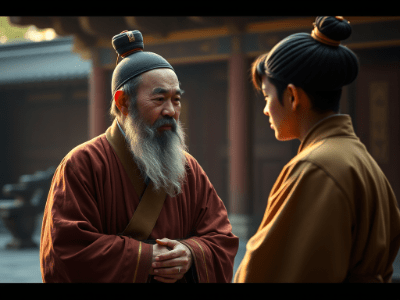
The Zhuangzi used historical figures such as Confucius to teach about the Dao. Yan Hui asked Confucius for permission to go to Wei to reform a violent ruler. Confucius advised against going, warning that he likely would be killed.

If he was fortunate enough not to be executed, he would probably still fail. Rulers are experts at bringing others to their side and can convince others to support them. Besides, one should be sure they have virtue in themselves before you try to reform others.

Yan Hui asked if he could reform the ruler by being resolute. Confucius responded that the ruler may make outward signs of reform but would never truly do so.

Not giving up easily, Yan Hui suggested outwardly agreeing with the ruler but remaining inwardly resolute. He could quote the words of historical teachers. Confucius responded, that he may avoid punishment, but would still not convert the tyrant.

The Daoist Approach

The Daoist approach to reform others is to be resolute inwardly and follow your own way. Don’t be motivated by fame or look for personal gain. Forget ego and be in a state of emptiness. Give the person advice only if they are willing to listen, otherwise remain silent.

Yan He wanted to reform the prince of Wei. Ju Boyu advised him to support the prince’s actions outwardly, but to be careful not to get drawn into his actions so much as be condemned by others.

The Ambassador

Ambassador Zigao of She asked Confucius for advice on his upcoming mission. Confucius reminded Zigao of the two great decrees: the duty to parents and to the nation. However, the greatest virtue is not to allow outside factors to affect your personal way and accept that there are things that you can not change.

Confucius went on to give advice on being a messenger. A messenger feels pressure to please both sides by exaggerating the positives. Exaggeration is irresponsible and reduces credibility. Inaccurate words can put the messenger in danger.

The messenger should never go beyond their orders or press too hard for agreement. A lasting agreement takes time and a bad agreement is hard to change. One should accept what you can’t change and focus on your own personal way.

Usefulness

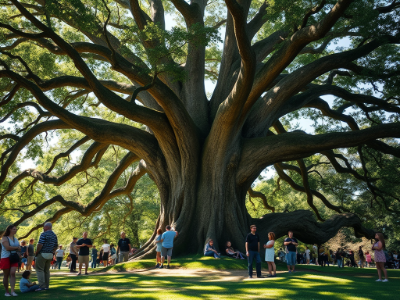
Trees feature prominently in Daoist thought. The carpenter Shi went to Qui and saw an enormous oak tree with its lowest branches 80 feet off the ground. He called the tree worthless because it could not be used for timber, boats, or doors. Shi had a dream where the Oak tree visited saying it was not useless because it sheltered hundreds of people. Besides, “useful” trees do not get to live out their normal lifespan because they are cut down prematurely.

In a similar episode, Ziqi of Nanbo saw a large tree in which thousands of horses could take shelter. Even though its gnarled and pitted limbs made it “useless” as timber, it was used by Holy Men for gatherings.

A disabled man named Shu had a twisted body and could not stand straight. He survived by washing other people’s clothes and getting handouts. In-spite of his physical disabilities he got by and lived out his normal years. He avoided conscription by the army and his physical disability paled in comparison to a disability of virtue.

Finally, Jie Yu was called the madman of Chu because he would cry out in public that the past was gone and the future would never arrive. The sage succeeds with the Dao and simply survives without it. No one can truly know the usefulness of something.

Conclusion

Trying to reform others can be dangerous and lead to failure. One must be sure in their own virtue before reforming others. The best approach is to be inwardly resolute and following your own personal way. Don’t be motivated by fame and only give advice if the other person is willing to listen.

A messenger should never exaggerate or press for an agreement. Twisted trees may appear useless but often have an unforeseen purpose living out its normal years. Twisted virtue is much worse than having a twisted body.

Zhuangzi Chapter 2: Discussion on Making All Things Equal

Master Zhuang is the second most influential writer in Daoism (Taoism) and the book Zhuangzi was named after him. Chapter Two is entitled Discussion on Making All Things Equal and describes how one can live in accordance with the Dao.

Great Understanding

The sage or wise person has great understanding of the Dao and shifts their focus to a more universal perspective. They do not let the stress of everyday life distract them.

The sage knows that their connection to the Dao is unique and different than any one else’s.

The sage is unhurried and goes along with the flow of life. They have a simple and uncomplicated existence.

Little Understanding

The foolish have little understanding of the Dao and live a busy, divisive, and complicated life. They are preoccupied with petty arguments and are convinced that they are always right. Consequently, they have high anxiety and find life difficult to manage.

They hurry through life without pausing or reflection and never have any satisfying accomplishments. This leaves them exhausted and unsatisfied.

Relativity of Life

The sage recognizes that life is relative. They recognize the concepts of right and wrong are dependent on the individual and situation.

What works for one person does not necessarily work for another. The characteristics of kindness and morality are often dependent on the society, individual, or situation.

The sage sees the unity of all things in the Dao and does not create artificial divisions.

Acceptance of Reality

The sage acknowledges that the Dao exists but does not waste their energy trying to define it. They do not get involved in needless arguments, but accepts life for what it is.

The sage is unaffected by strife and unconcerned about wealth, sickness, and death. They make themself one with the universe, live in simplicity, and allow things to be as they are.

The sage recognizes the absurdity of life and that they never will truly understand it.

Conclusion

The sage has great understanding of the Way. They find comfort in the midst of chaos. They stay grounded and live their life as it plays out. They make the most of their situation and realize that good and bad are relative to the individual and situation.

Emptiness

The Dao De Jing (Tao Te Ching) outlines how one can live in accordance with the “Way” of the universe. One manner of doing this is using meditation to reach a state of emptiness. This can provide peace of mind and allow a person to get the most out of each moment.

Value in Emptiness

The importance of emptiness is illustrated by the wheel hub, clay vessel, and the house. Their value lies in their emptiness and not the physical structure itself.

Infant State

This state can help you return to your infant state and is like losing your self and going beyond yourself. Sometimes it is translated as the “uncarved block.” When one reaches absolute emptiness, they can consider and examine all things in the universe and reach enlightenment (Dao De Jing, Chapters 13, 16, and 28).

The Inner Light

George Harrison referenced the concept of emptiness in the Beatle’s song, “The Inner Light.”