
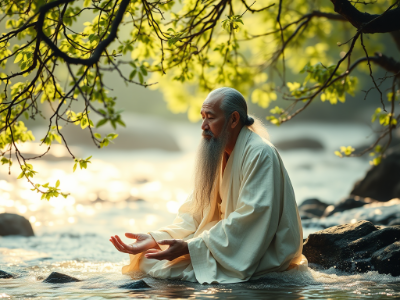
Master Zhuang is the second most influential writer in Daoism (Taoism) and the book Zhuangzi was named after him. Chapter Three is entitled The Secret of Caring for Life and describes how best to live in the world. This is a very short chapter but has three important parables.
Knowledge v. Lifespan
The sage acknowledges that they have a limited lifespan and can’t possibly know everything. One should never believe they have all the answers and are always right. Instead, remain grounded, avoid fame, and try not to break the law. Take care of your family and be content with the life that you have.
“Your life has a limit but knowledge has none. If you use what is limited to pursue what has no limit, you will be in danger. If you understand this and still strive for knowledge, you will be in danger for certain! If you do good, stay away from fame. If you do evil, stay away from punishments. Follow the middle; go by what is constant, and you can stay in one piece, keep yourself alive, look after your parents, and live out your years.”
Parable of the Butcher
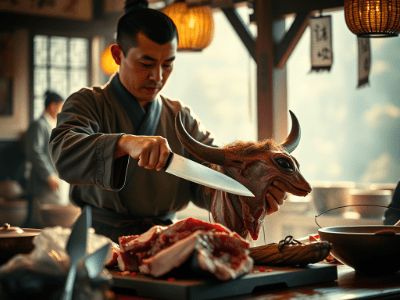
The parable of the butcher provides a valuable lesson on completing tasks. In the parable a butcher carved up oxen year after year without ever dulling his knife because he was always in the flow. When attempting a new task, one is often clumsy and hyper-focused. They perceive the task using their eyes and try to figure out how to do it. When the task is especially difficult they will size up the challenge, work carefully, and go slow.
“However, whenever I come to a complicated place, I size up the difficulties, tell myself to watch out and be careful, keep my eyes on what I’m doing, work very slowly, and move the knife with the greatest subtlety, until — flop! the whole thing comes apart like a clod of earth crumbling to the ground. I stand there holding the knife and look all around ”
The sage completes tasks by entering a state of Wu Wei or “effortless action.” This goes beyond being skillful or perceiving with the eyes. Instead it uses intuition to go along with the natural contours of the task. The person no longer does an action, but the action does itself.
“What I care about is the Way, which goes beyond skill. When I first began cutting up oxen, all I could see was the ox itself. After three years I no longer saw the whole ox. And now — now I go at it by spirit and don’t look with my eyes. Perception and understanding have come to a stop and spirit moves where it wants. I go along with the natural makeup, strike in the big hollows, guide the knife through the big openings, and follow things as they are. So I never touch the smallest ligament or tendon, much less a main joint.”
Parable of the Commander
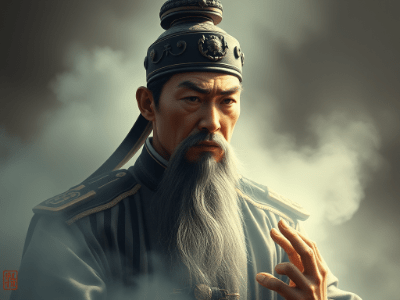
The parable of the commander teaches a lesson on freedom of choice. In the story a military commander has been punished by having one of his foots amputated. He was asked if this was done by man or heaven. He answers that it was done by heaven. Taoism teaches that people are not happy unless they have freedom of choice. However, the sage recognizes that choices often have severe consequences. The commander’s poor choices led to his punishment.
“It was Heaven, not man,” said the commander. “When Heaven gave me life, it saw to it that I would be one-footed. Men’s looks are given to them. So I know this was the work of Heaven and not of man. The swamp pheasant has to walk ten paces for one peck and a hundred paces for one drink, but it doesn’t want to be kept in a cage. Though you treat it like a king, its spirit won’t be content.”
Parable of the Mourner
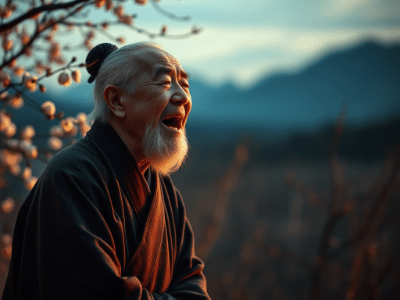
The parable of the mourner illustrates the natural progression of life. In it a person mourned a friend by yelling three times and then leaving. Others asked if the mourner should have done more for such a close friend? Shouldn’t he participate in the traditional mourning rituals? The mourner answered no because the sage recognizes that death is simply a part of the natural pattern of the Dao. People are born, grow, decay, and then die. One should be content with their lifetime and accept this pattern without grief.
“Your master happened to come because it was his time, and he happened to leave because things follow along. If you are content with the time and willing to follow along, then grief and joy have no Way to enter in. In the old days, this was called being freed from the bonds of God.
Conclusion
The secret of caring for life is to realize that you will never have complete knowledge and it is foolish to believe otherwise. One should stay centered, be constant, focus on family, and be content with what you have. It is natural for people to want to make their own choices even when those choices lead to severe consequences. The pattern of the Dao includes birth and death and one should accept this in order to be content.







 Daoism