
Master Zhuang is the second most influential writer in Daoism (Taoism) and the book Zhuangzi was named after him. Chapter Two is entitled Discussion on Making All Things Equal and describes how one can live in accordance with the Dao.
Great Understanding
The sage or wise person has great understanding of the Dao and shifts their focus to a more universal perspective. They do not let the stress of everyday life distract them.
“You hear the piping of men, but you haven’t heard the piping of earth. Or if you’ve herd the piping of earth, you haven’t heard the piping of Heaven!”
The sage knows that their connection to the Dao is unique and different than any one else’s.
“Blowing on the ten thousand things in a different way, so that each can be itself-all take what they want for themselves, but who does the sounding?”
The sage is unhurried and goes along with the flow of life. They have a simple and uncomplicated existence.
“Great understanding is broad and unhurried. Great words are clear and limpid.”
Little Understanding
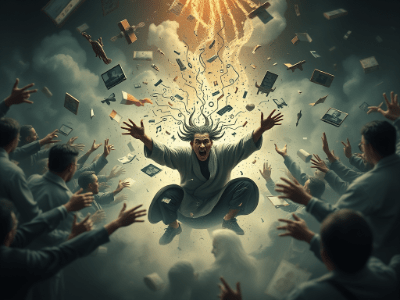
The foolish have little understanding of the Dao and live a busy, divisive, and complicated life. They are preoccupied with petty arguments and are convinced that they are always right. Consequently, they have high anxiety and find life difficult to manage.
“Little understanding is cramped and busy; little words are shrill and quarrelsome. In waking hours, their bodies hustle. With everything they meet they become entangled. Day after day they use their minds in strife, sometimes grandiose, sometimes sly, sometimes petty. Their little fears are mean and trembly; their great fears are stunned and overwhelming. They cling to their position as though they had sworn before the gods, sure that they are holding on to victory.“
They hurry through life without pausing or reflection and never have any satisfying accomplishments. This leaves them exhausted and unsatisfied.
“Sometimes clashing with things, sometimes bending before them, he runs his course like a galloping steed, and nothing can stop him. Sweating and laboring to the end of the his days and never seeing his accomplishment, utterly exhausting himself and never knowing where to look for rest – can you help pitying him?“
Relativity of Life
The sage recognizes that life is relative. They recognize the concepts of right and wrong are dependent on the individual and situation.
“His ‘that’ has both a right and wrong in it; his ‘this,’ too, has both a right and wrong in it. A state in which ‘this’ and ‘that’ no longer find their opposites is called the hinge of the Way.”
“The way I see it, the rules of benevolence and righteousness and the paths of right and wrong all are hopelessly snarled and jumbled.”
What works for one person does not necessarily work for another. The characteristics of kindness and morality are often dependent on the society, individual, or situation.
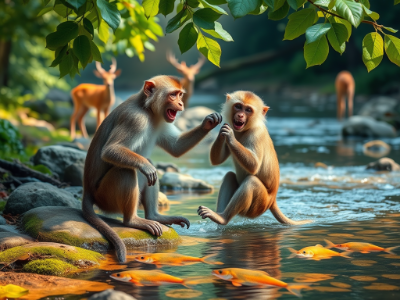
“Monkeys pair with monkeys, deer go out with deer, and fish play around with fish. Men claim that Maoqiang and Lady Li were beautiful; but if fish saw them, the would dive to the bottom of the stream; if birds saw them, they would fly away; and if deer saw them, they would break into a run.”
The sage sees the unity of all things in the Dao and does not create artificial divisions.
“The Way makes them all into one. Their dividedness is their completeness; their completeness is their impairment. No thing is either complete or impaired, but all are made into one again.”
Acceptance of Reality
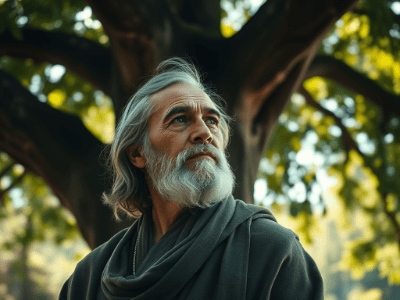
The sage acknowledges that the Dao exists but does not waste their energy trying to define it. They do not get involved in needless arguments, but accepts life for what it is.
“As to what is beyond the Six Realms, the sage admits it exists but does not theorize. As to what is within the Six Realms, he theorizes but does not debate.”
“The sage embraces things. Ordinary men discriminate among them and parade their discriminations before others.”
The sage is unaffected by strife and unconcerned about wealth, sickness, and death. They make themself one with the universe, live in simplicity, and allow things to be as they are.
“A man like this rides the clouds and mist, straddles the sun and moon, and wanders beyond the four seas. Even life and death have no effect on him, much less the rules of profit and loss!”
The sage recognizes the absurdity of life and that they never will truly understand it.
“Once Zhuang Zhou dreamed he was a butterfly, a butterfly flitting and fluttering around, happy with himself and doing as he pleased. He didn’t know he was Zhuang Zhou. Suddenly he woke up, and there he was, solid and unmistakable Zhuang Zhou. But he didn’t know if he were Zhuang Zhou who had dreamed he was a butterfly or a butterfly dreaming he was Zhuang Zhou. Between Zhuang Zhou and a butterfly, there must be some distinction!”
Conclusion
The sage has great understanding of the Way. They find comfort in the midst of chaos. They stay grounded and live their life as it plays out. They make the most of their situation and realize that good and bad are relative to the individual and situation.
“Harmonize them all with the Heavenly Equality, leave them to their endless changes, and so live out your years.”
“Forget the years; forget distinctions. Leap into the boundless and make it your home!”
 Daoism